We (I) need science
Argues for rigorous scientific studies on the impact and risks of using LLMs in software development, highlighting current lack of impartial research.
A developer shares critical drawbacks of using Claude Code for AI-assisted programming, focusing on hidden issues like problematic test generation and maintenance challenges.
Explains the three key growth curves—exponential, linear, and logarithmic—that define a scalable software business and an engineer's role in building long-term assets.
A critical analysis of the '10x productivity' claims in AI-assisted software development, questioning quality and oversight.
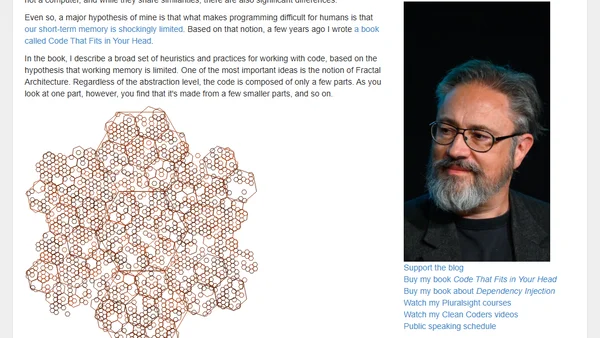
Explores how software architecture principles for human cognition, like fractal design, could improve AI's ability to work with large codebases.
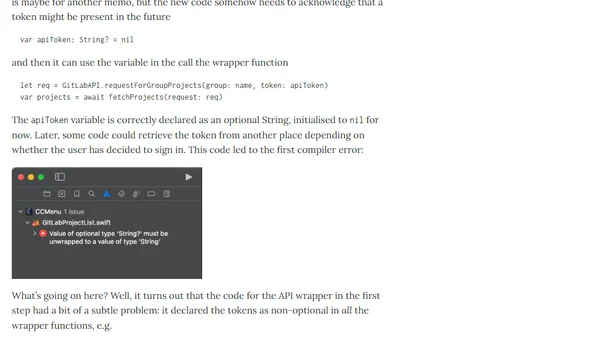
Explores how AI coding agents impact internal code quality, using a case study of adding GitLab support to a Swift app.
A developer shares key lessons from one month of AI-powered app development, focusing on the pitfalls of speed and the importance of maintaining control and code quality.
Martin Fowler's blog fragments discuss AI/works™ platform, AI electricity consumption, and the need for rigor in AI-enabled software development.
Argues that ugly, legacy code can hold valuable domain knowledge and be more practical to refactor than to rewrite from scratch.
A developer's reflection on the psychological impact and community effects of over-reliance on AI coding assistants, likening them to personal daemons.
Explores how AI prompts have evolved from simple text strings into critical, reusable system components with logic, and the challenges this creates.
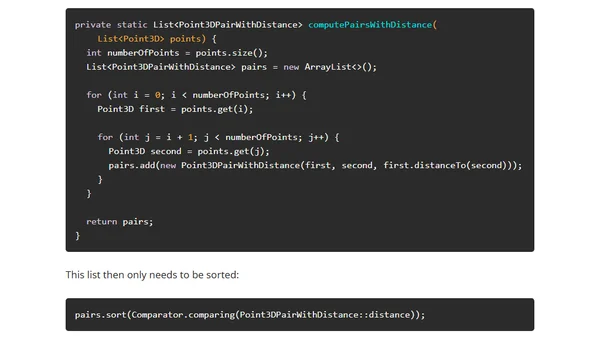
A developer shares their Java solutions for Advent of Code 2025 puzzles, focusing on code clarity and using Java 25 features.
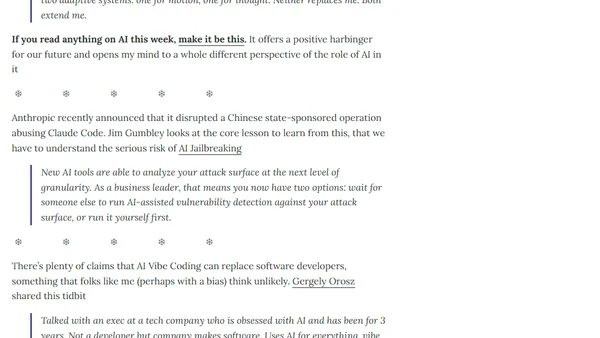
A summary of recent tech articles discussing AI's impact on code quality, AI-assisted healthcare, security risks, and developer productivity.
A developer reflects on the balance between concise and clear code, arguing that too little code can be as harmful as too much.
Explores how people and team ownership, not just technical patterns, are key to untangling and preventing messy 'ball of mud' software architecture.
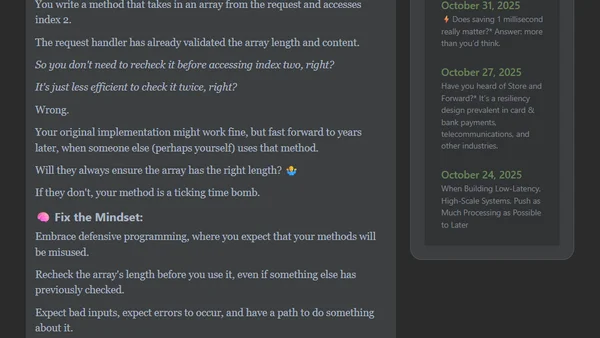
A developer discusses the dangers of assuming code won't change or be misunderstood, advocating for defensive programming practices.
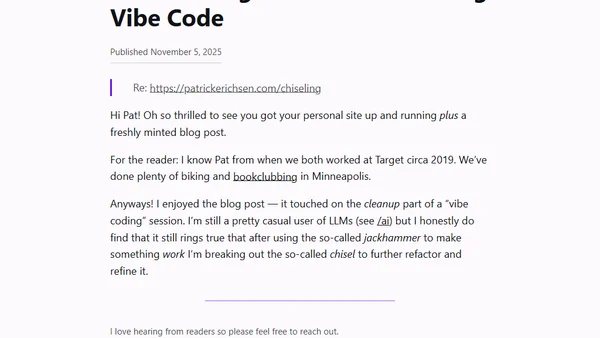
A response to a blog post about refining AI-generated 'vibe code' through manual refactoring and cleanup.
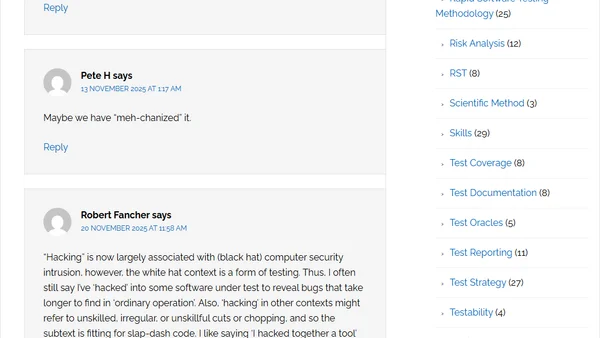
A software tester proposes the term 'slop-coding' to describe quickly built, untested tools, contrasting it with 'vibe coding' for clearer communication.
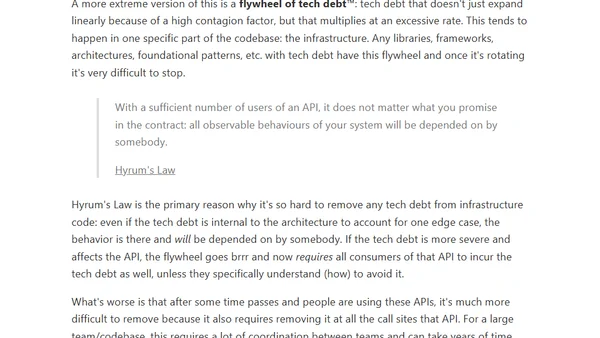
Explores how tech debt in infrastructure code creates a self-perpetuating 'flywheel' effect, making it extremely costly and difficult to fix.
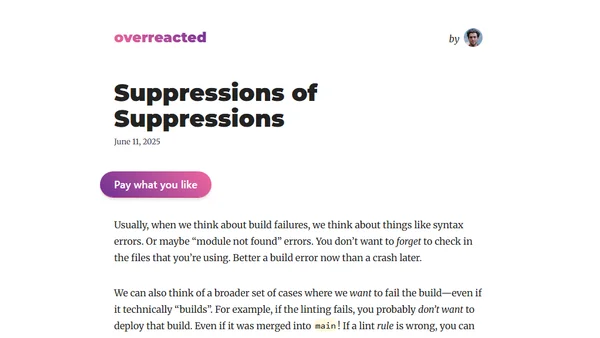
Discusses the risks of suppressing lint rules in code and proposes a meta-lint rule to prevent suppressing critical rules.