No top articles this week
AI Reward Design: Stop Optimizing the Wrong Outcome
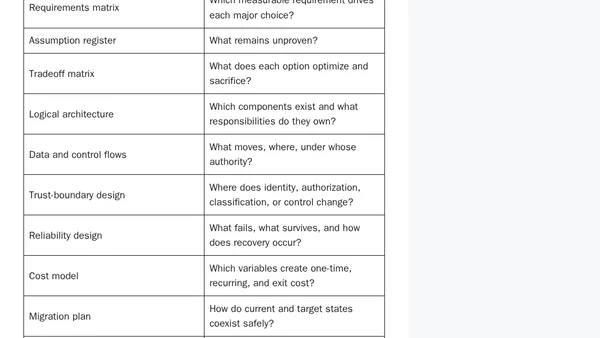
AI reward design: define business outcomes, not easy metrics. Separate permissions, verification, escalation, and efficiency to avoid gaming.
Discover the best personal developer blogs and articles from around the world. Stay updated with the latest trends, tutorials, and insights from the developer community.
Stay updated with developer content directly in your browser
Most upvoted articles from the past 30 days
No top articles this week
Stay updated with the newest content from developer blogs
AI reward design: define business outcomes, not easy metrics. Separate permissions, verification, escalation, and efficiency to avoid gaming.
Interview with Jos Roseboom on Spring, JPA, Hibernate performance tuning and real-world production pitfalls.
Datasette releases security patches 1.0a39 and 0.65.4, fixing subtle bugs found via AI-assisted audits for public instances.
trynix.dev runs any Nix package from the past 13 years in a browser via qemu-wasm, enabling URL-addressable interactive shells and PR previews.
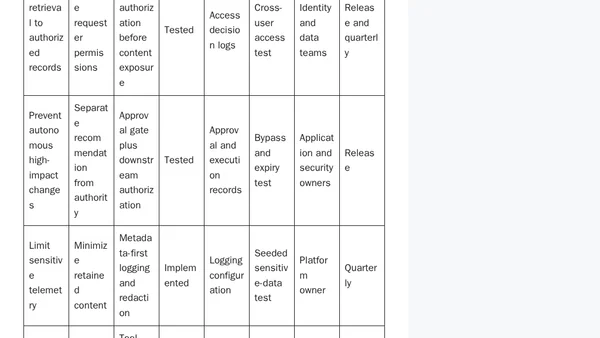
Enterprise RAG citation controls: separate citation existence from evidence quality, applicability, and disclosure permission.
How to enforce RAG retrieval permissions based on the user, not service accounts, to prevent unauthorized access.
Enterprise RAG security as a data boundary: source admission, processing controls, derived data governance, and lifecycle management for AI pipelines.
How to assess management-plane failures in hybrid infrastructure: what keeps running, what stops, and how to recover without vCenter, Azure, identity, or WAN.
Identity disaster recovery: restoring Active Directory, Entra, certificates, and privileged access before workloads return.
Treating Kubernetes as a platform product: SLOs, upgrade gates, capacity planning, and recovery for dependable services.
Learn how hybrid platform dependency mapping builds an incident-ready service map to explain what business services need to run, restart, and recover.
Shopify moves from React Native back to native Swift and Kotlin apps, citing AI agents as the reason the two-platform cost is no longer decisive.