Too much less is not too much more
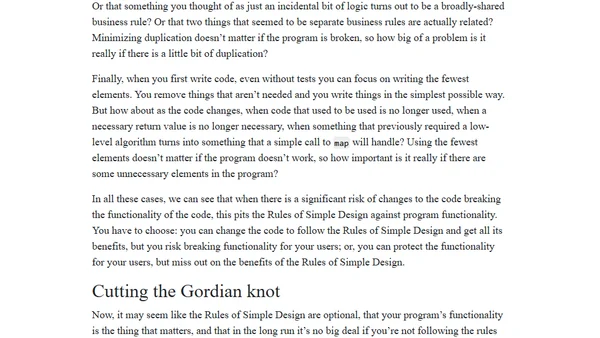
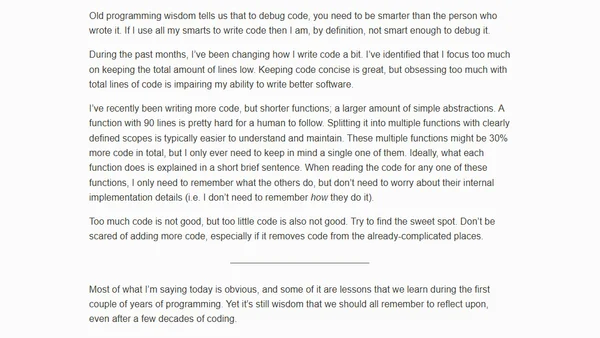
A developer reflects on the balance between concise and clear code, arguing that too little code can be as harmful as too much.
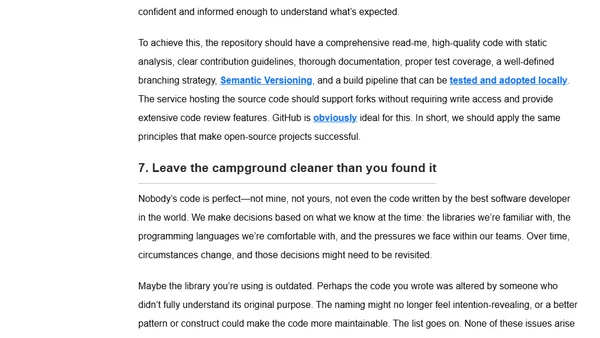

A senior developer shares eight key lessons on writing clean code, conducting effective reviews, and professional best practices from decades of experience.
Argues against blindly following software development best practices, advocating for user-centric and context-specific approaches instead.
Explores how comprehensive testing enables the 'Four Rules of Simple Design,' focusing on how tests support change, intention, and duplication removal.
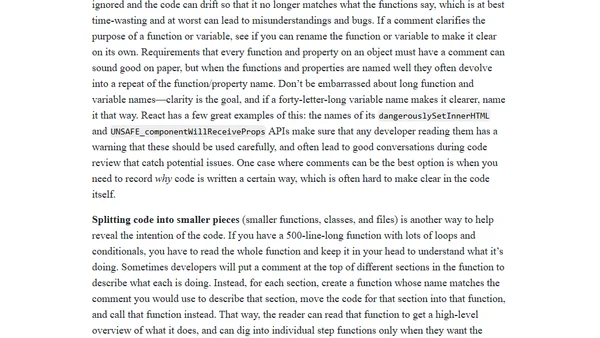
Explores the 'Reveals Intention' rule from Kent Beck's Four Rules of Simple Design, focusing on writing clear, readable code.
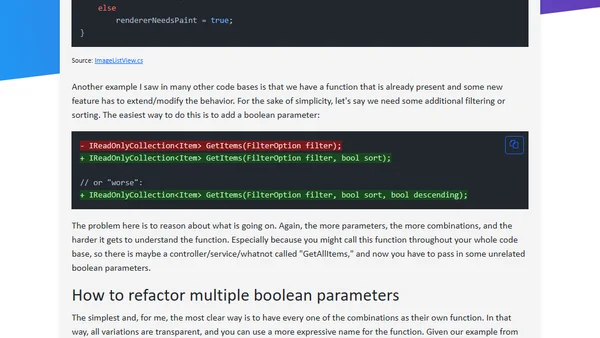
Explains why using multiple boolean parameters in functions is problematic and demonstrates cleaner refactoring techniques.
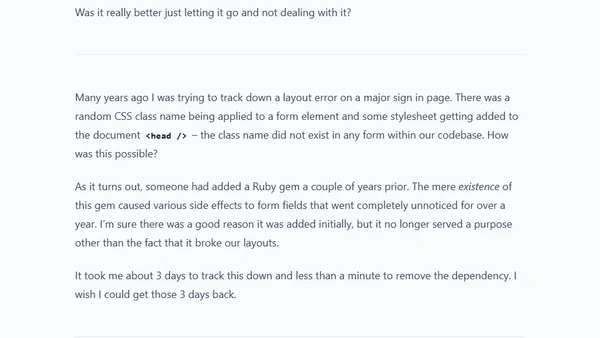
A developer argues for proactively cleaning up unused code and dependencies to prevent future technical debt and hidden bugs.
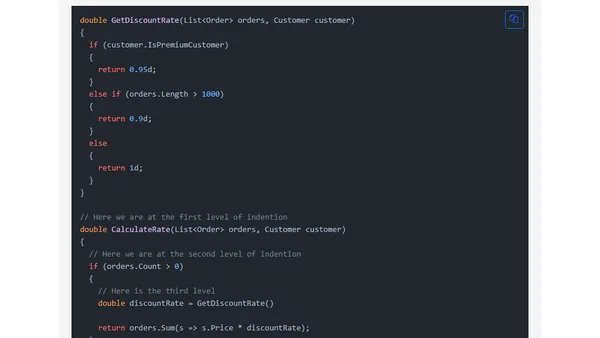
Explains why deep code nesting is problematic and demonstrates refactoring techniques like extraction and inversion to reduce complexity in C#.
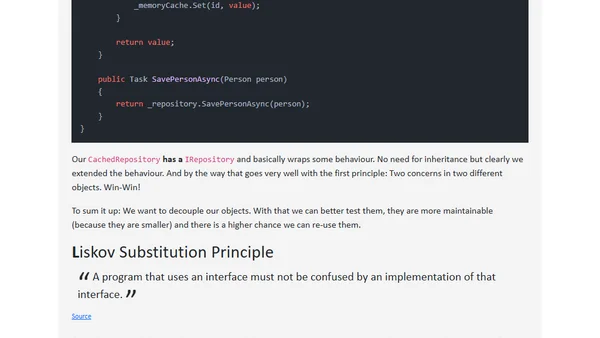
A detailed guide to SOLID principles in C#, explaining each principle with code examples to improve code readability, maintainability, and flexibility.
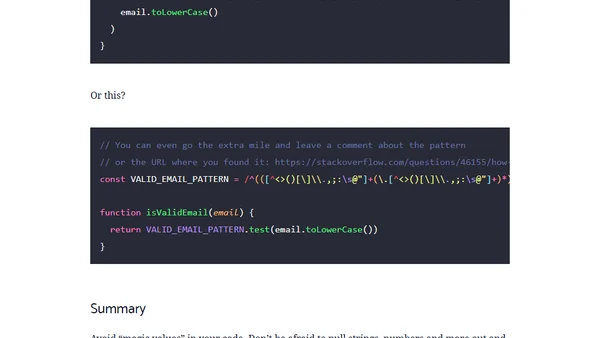
Explains what 'magic values' are in programming and provides examples of how to replace them with named constants for better code clarity.
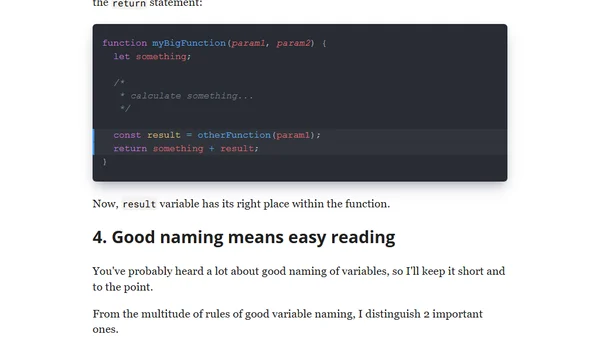
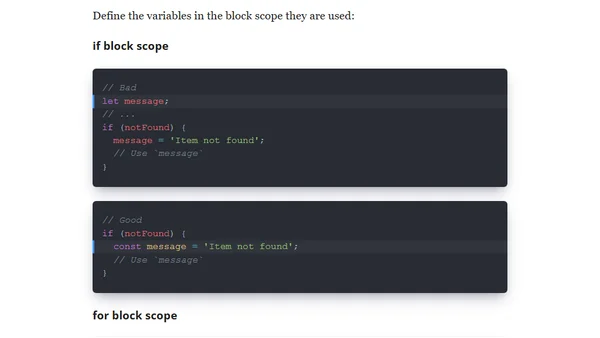
Learn 5 best practices for writing clean, maintainable, and readable JavaScript variables, focusing on const/let, scope, and naming.
A defense of the SOLID principles in modern software development, arguing they remain essential for writing simple, maintainable code.
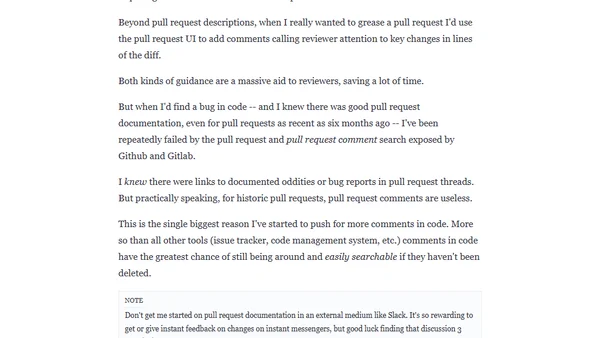
A developer argues for the value of inline code comments as a durable form of documentation, contrasting them with ephemeral pull request discussions.
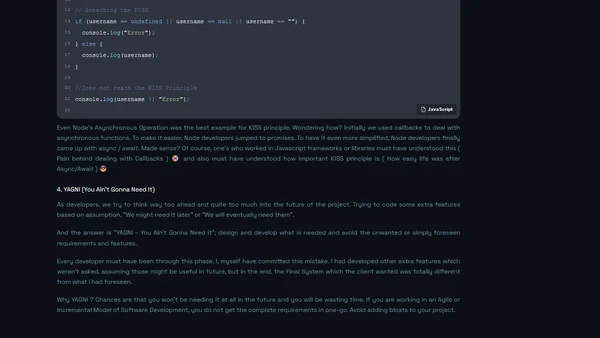
Explains fundamental software engineering principles like DRY to help developers write cleaner, more maintainable code.
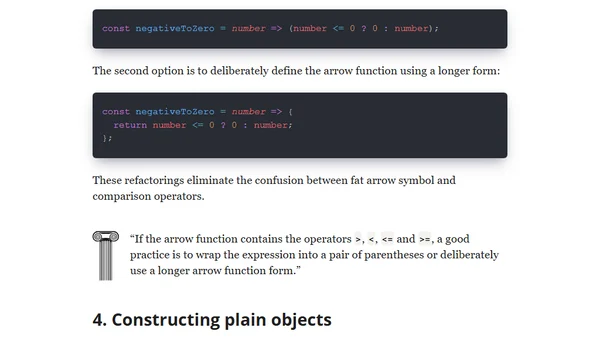
Learn 5 essential best practices for writing clean and effective arrow functions in JavaScript, including naming and formatting tips.
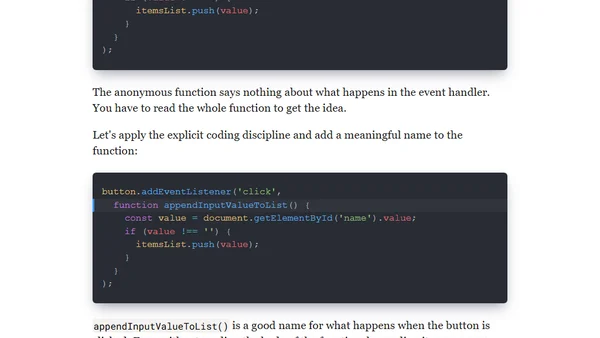
Advocates for explicit coding discipline, focusing on clear naming and communication to improve code readability and prevent misunderstandings.
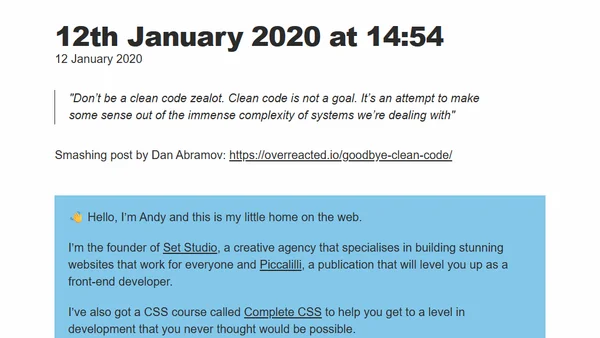
Dan Abramov argues against being a 'clean code zealot', stating it's a tool for managing complexity, not an end goal.
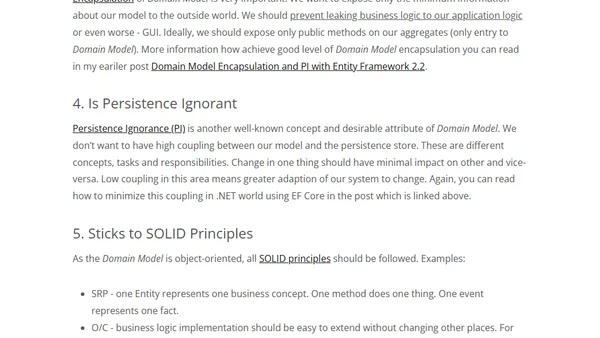
Explores principles for creating a clean, maintainable Domain Model in software, applying clean code concepts to Domain-Driven Design.
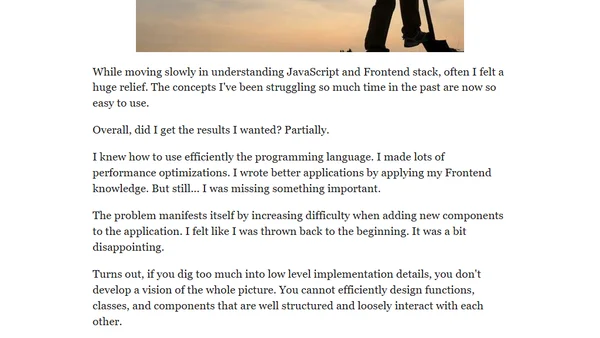
A software developer shares a personal journey from shallow knowledge to deep expertise, emphasizing deliberate learning in JavaScript and CSS to overcome project failures.
Identifies and explains five common JavaScript coding anti-patterns, such as implicit type conversion, with actionable fixes to improve code quality.