Standing Out (Part 2)
A hiring manager's advice on standing out in tech job applications, emphasizing personalized emails and meaningful interview conversations.
A critique of the 'considered harmful' mindset in programming, using a popular Laravel critique as a starting point to discuss self-reflection and best practices.
A guide for developers to shed the 'Junior' title by shifting mindset and accelerating career growth through proactive learning.
Honeycomb's CEO discusses the company's 'boring technology culture' philosophy, distinguishing between formal organizational structure and informal team dynamics.
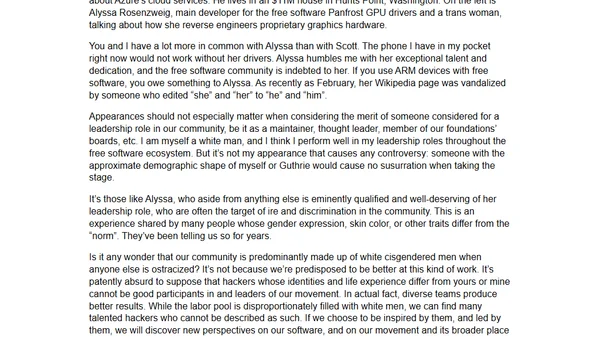
An article discussing leadership in tech, challenging biases based on appearance by comparing two developers, and advocating for diversity in open-source communities.
Explores key characteristics of well-maintained software, focusing on code understandability, clear steps, and comprehensive testing for easier changes.
Discusses the importance of product-minded engineers in startups, their traits, and the challenge of cultivating this mindset in the tech industry.
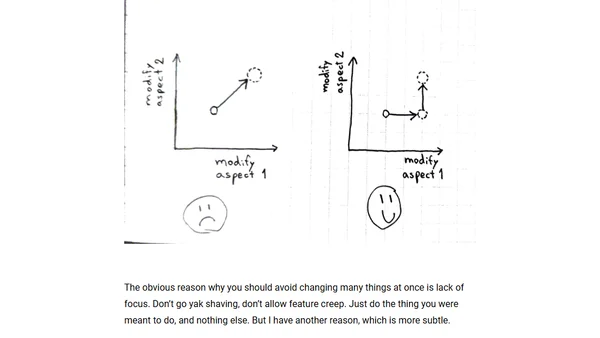
A developer explains 'Parametric Progress', a method for improving codebases by changing only one aspect at a time to better understand system effects.
A manager discusses the critical role of clear writing in tech leadership, from specs to feedback, and the need to adapt style.
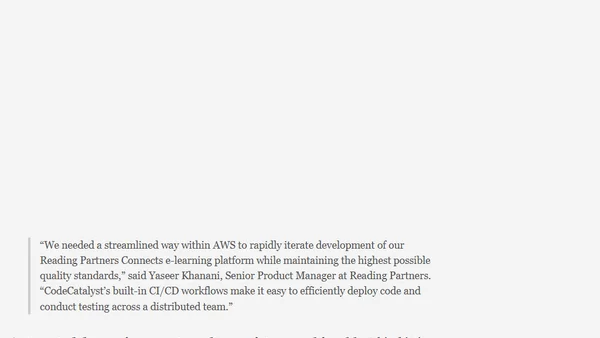
AWS announces general availability of Amazon CodeCatalyst, a unified DevOps service for planning, coding, building, testing, and deploying applications.
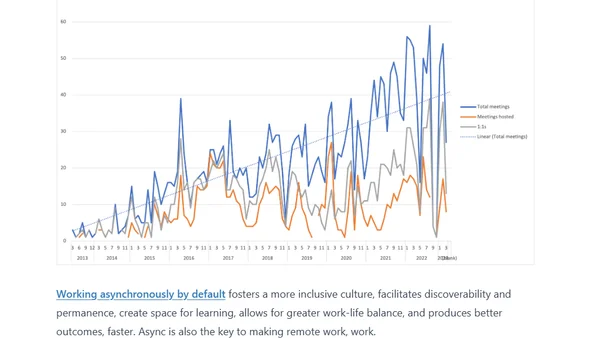
Advocates for 'async first' communication in tech teams, using meetings only as an escalation point for complex discussions.
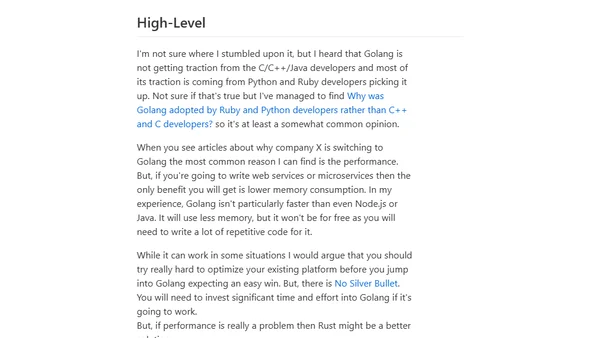
A critical analysis of the Go programming language, covering its syntax, marketing claims of simplicity, learning curve, and manual memory management challenges.
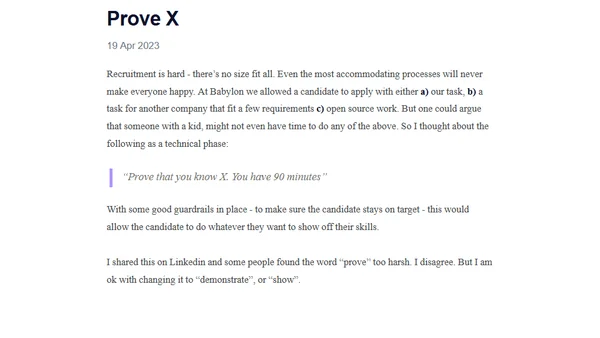
A developer proposes a flexible 90-minute technical interview format where candidates demonstrate skills in their chosen way.
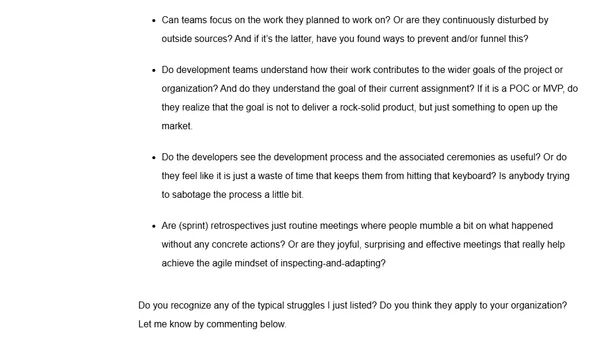
A consultant provides 20 questions to assess the maturity, predictability, and effectiveness of software development teams and their processes.
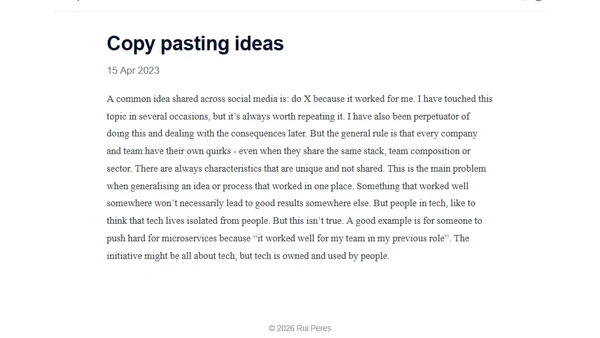
Discusses why blindly copying technical solutions or processes from one team to another often fails due to unique team and company contexts.
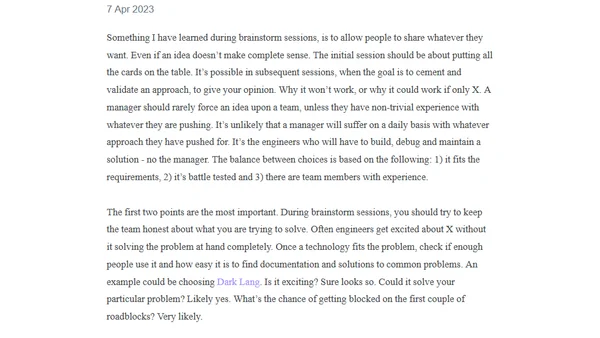
A guide on how engineering teams should approach technology selection, emphasizing problem-fit, proven solutions, and team experience.
Explores how AI, particularly GPT-based systems, might change software development by potentially shifting from traditional source code to prompting languages.
A software engineer turned vendor discusses the loss of credibility and offers advice on how to be taken seriously when selling software.
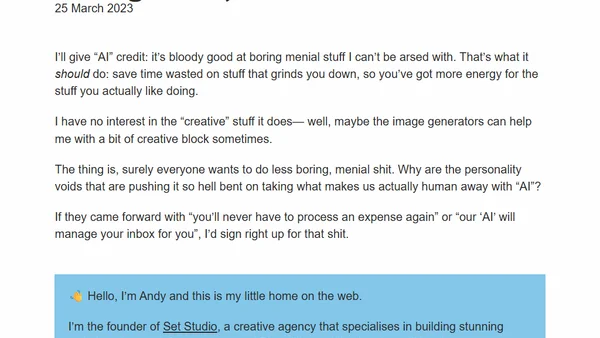
A developer argues that AI should focus on automating tedious tasks to free up human energy for creative and meaningful work.
A developer argues for proactively cleaning up unused code and dependencies to prevent future technical debt and hidden bugs.