AI Terminology Explained – Know What You’re Talking About
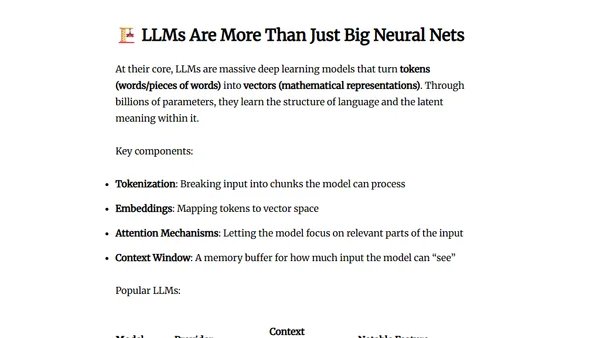
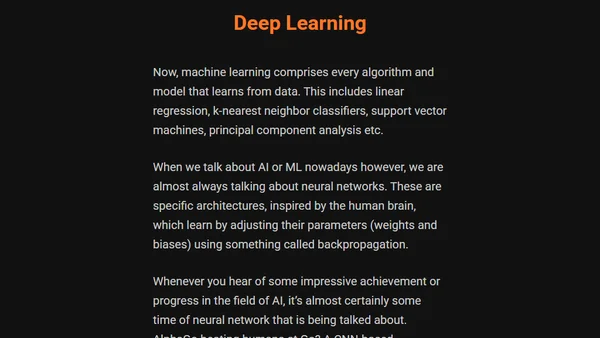
Explains key AI terminology like AI, ML, deep learning, and LLMs to help engineers use the correct terms.
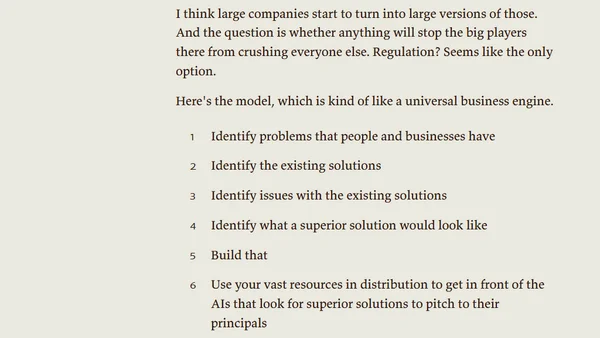
Explores how AI could transform large tech companies into vast networks of micro-startups, shifting the role of developers to broader builders.
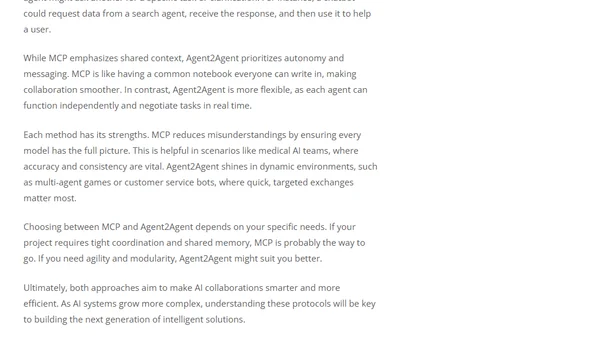
Compares Model Context Protocol (MCP) and Agent2Agent (A2A), two AI communication frameworks for multi-model collaboration and agent interaction.
A software engineer explains how they use AI tools to boost productivity and argues why AI won't replace software engineering jobs.
Explores the evolution of AI from symbolic systems to modern Large Language Models (LLMs), detailing their capabilities and limitations.
Announcing EpicAI.pro, a new learning platform focused on building applications for the AI era, teaching foundational principles for AI-agent interaction.
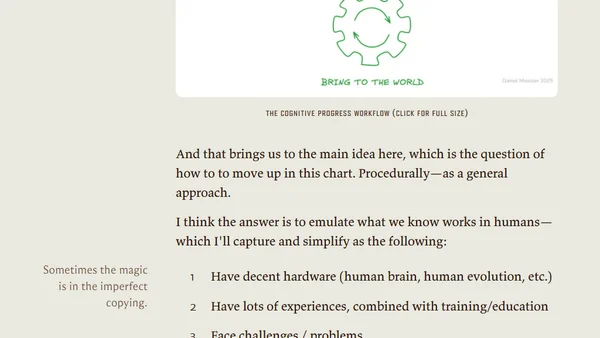
Explores a human-centric definition of ASI and proposes a scalable, iterative methodology for achieving both AGI and ASI.
Explores the human role in the AI age, arguing we must value critical thinking, agency, and creativity over competing with AI on raw intelligence.
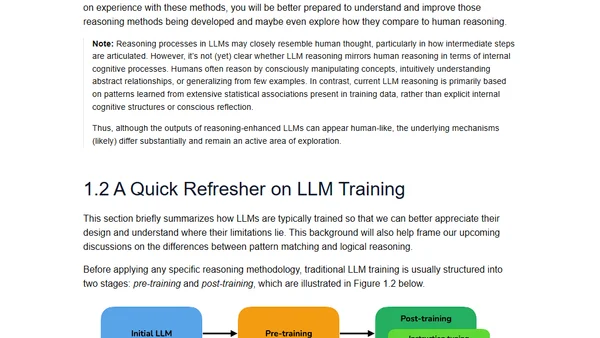
An introduction to reasoning in Large Language Models, covering key concepts like chain-of-thought and methods to improve LLM reasoning abilities.
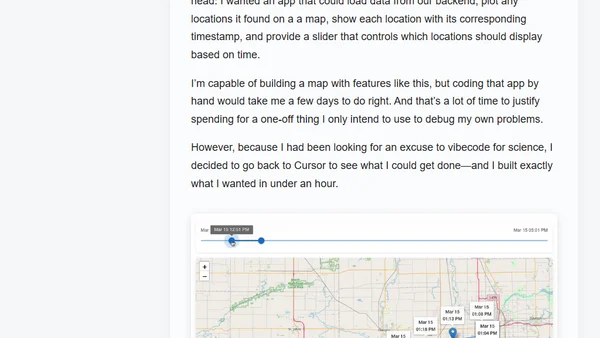
Explores the rise of 'vibecoding'—AI-assisted no-code/low-code development—and its surprising viability for both technical and non-technical users.
Explores ethical boundaries and risks of AI, advising where human judgment should prevail over automation.
Argues that AI can improve beyond current transformer models by examining biological examples of superior sample efficiency and planning.
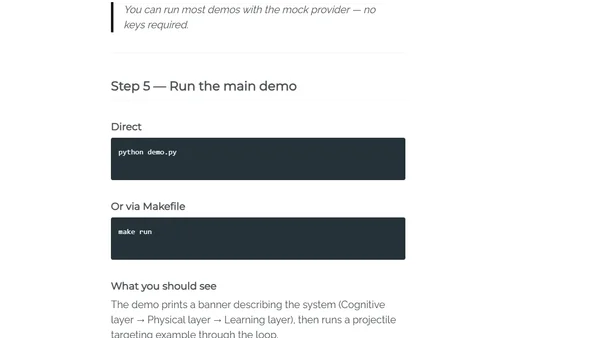
Introducing Physica, a Physics World Model AI that enforces physical laws to prevent errors in AI-generated simulations, moving beyond token fluency.
A computer science academic reflects on academia's role in shaping societal narratives, especially around AI, through open technology and sober assessment.
Explores AI's potential as a universal problem-solving tool, framing any challenge as a transition from a current state to a desired state.
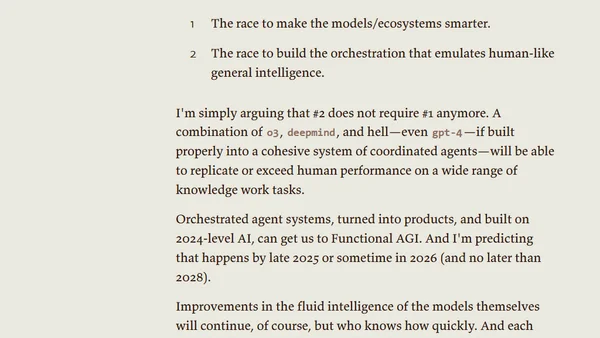
Argues that current AI models are already capable of achieving Functional AGI through better orchestration of existing systems, not new model breakthroughs.
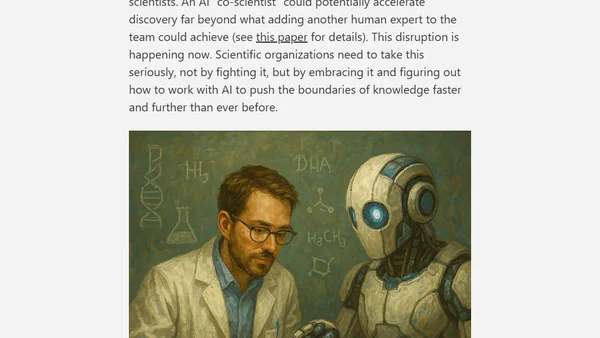
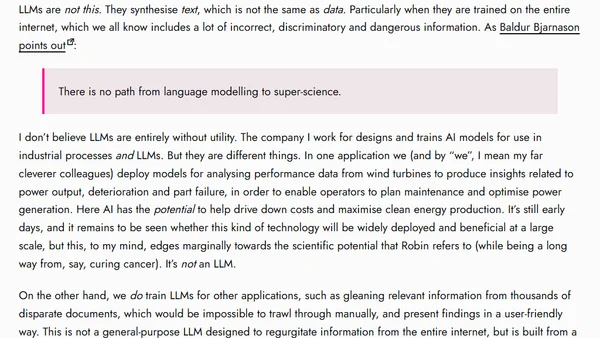
An analysis of the ethical debate around LLMs, contrasting their use in creative fields with their potential for scientific advancement.
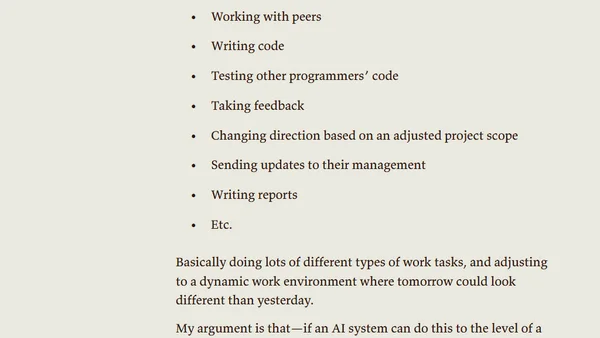
Distinguishes between Functional AGI (replacing knowledge workers) and Technical AGI (true generalization), arguing Functional AGI's societal impact matters most.
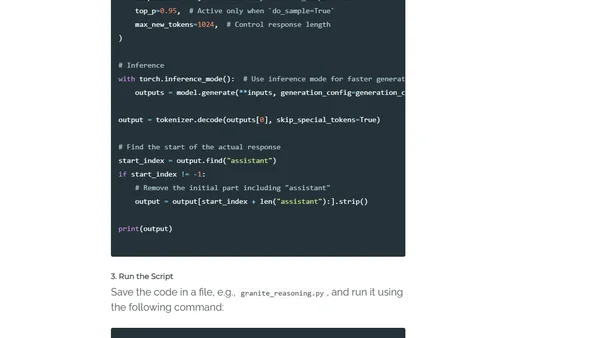
A technical guide exploring IBM's Granite 3.1 AI models, covering their reasoning and vision capabilities with a demo and local setup instructions.
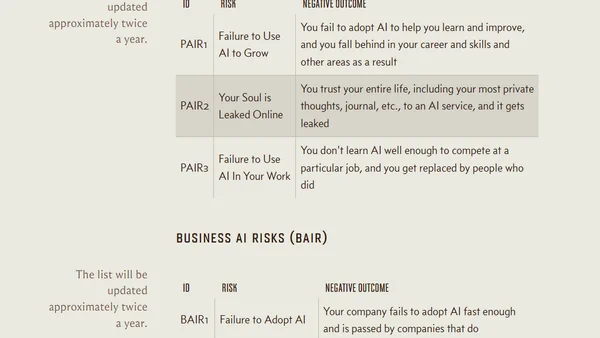
A guide outlining the top 10 personal and business risks associated with AI adoption, including failure to adopt and security concerns.