Semantic Layer vs. Metrics Layer: What's the Difference?
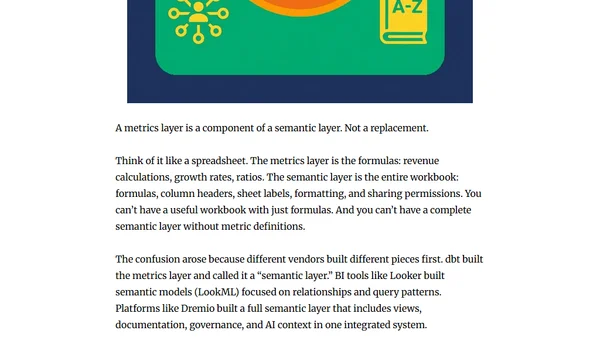
Explains the difference between a metrics layer and a semantic layer in data architecture, clarifying their distinct roles and relationship.
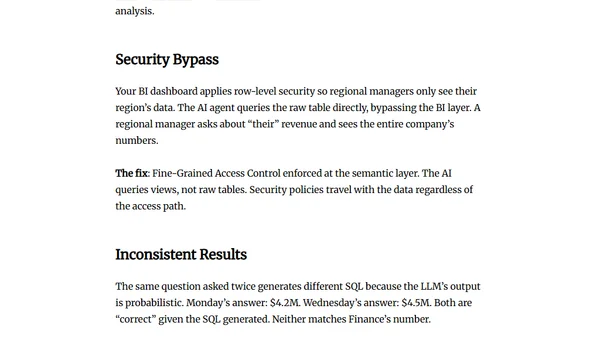
Explains why AI data analytics fail without a semantic layer to define business metrics and ensure accurate, secure queries.
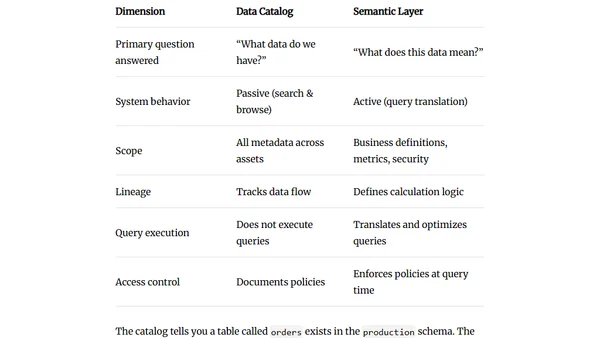
Explains the distinct roles of data catalogs and semantic layers in data architecture, arguing they are complementary tools.
A step-by-step guide to building a robust semantic layer for consistent data metrics, covering architecture, stakeholder alignment, and implementation.
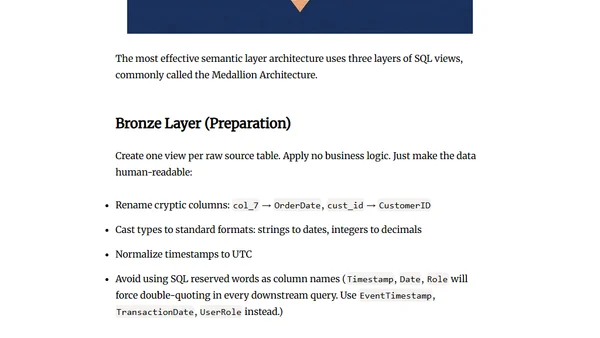
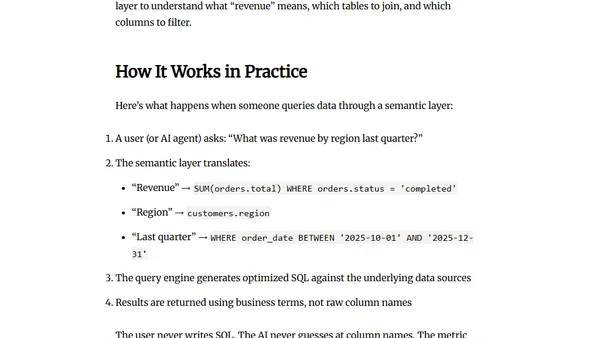
Explains what a semantic layer is, its components, and how it provides consistent business definitions for data queries and AI agents.
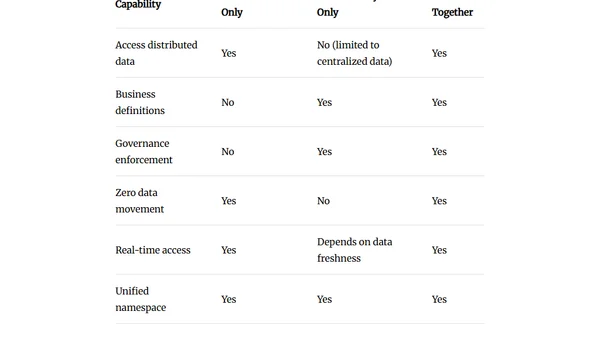
Explains how data virtualization and a semantic layer enable querying distributed data without copying, reducing costs and improving freshness.
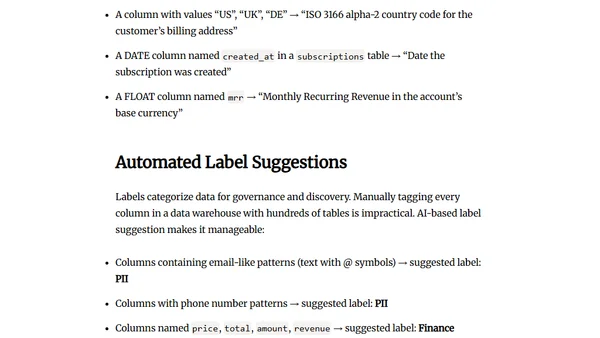
Explains how a self-documenting semantic layer uses AI to automate data documentation, reducing manual work and governance risks for data teams.
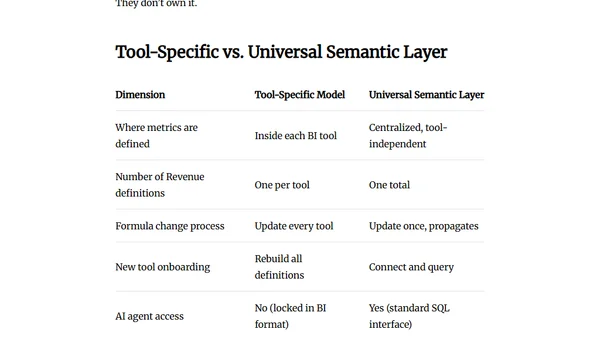
Explains Headless BI and how a universal semantic layer centralizes metric definitions to replace tool-specific models, enabling consistent analytics.
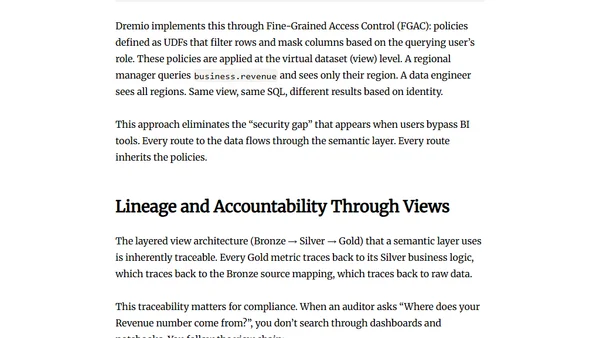
Explains how a semantic layer enforces data governance by embedding policies directly into the query path, ensuring consistent metrics and access control.
Seven common data modeling mistakes that cause reporting errors and slow analytics, with practical solutions to avoid them.
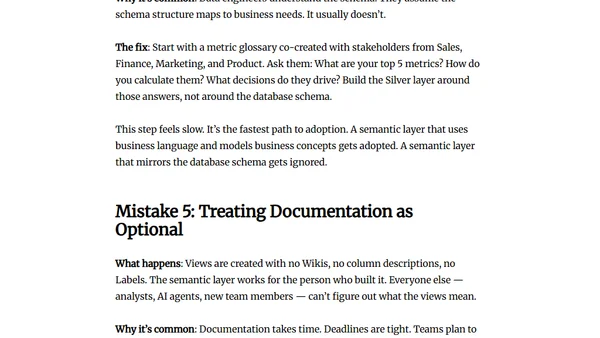
Seven critical mistakes that can derail semantic layer projects in data engineering, with practical advice on how to avoid them.
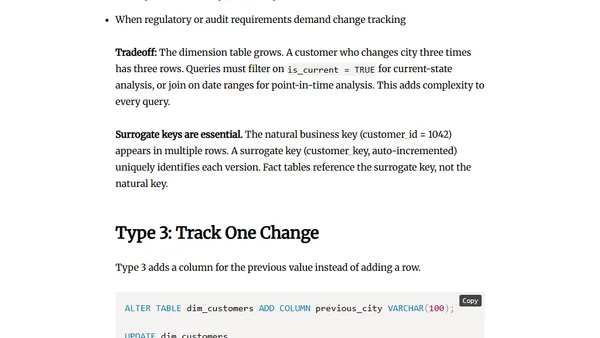
Explains Slowly Changing Dimensions (SCD) types 1-3 for managing data history in data warehouses, with practical examples.
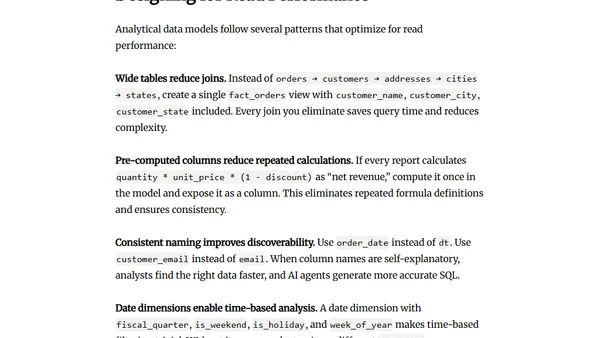
Explains why transactional data models are inefficient for analytics and how to design denormalized, query-optimized models for better performance.
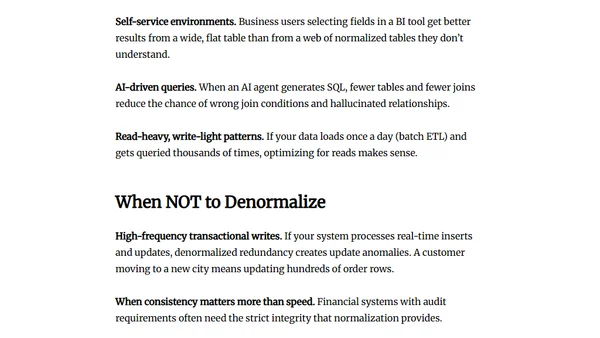
Explains database denormalization: when to flatten data for faster analytics queries and when to avoid it.
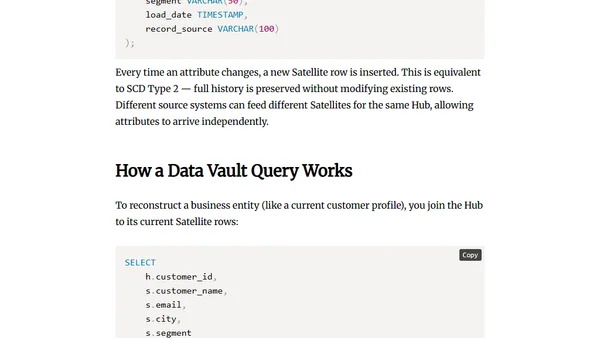
Explains Data Vault data modeling, its core components (Hubs, Links, Satellites), and the problems it solves for complex, evolving data sources.
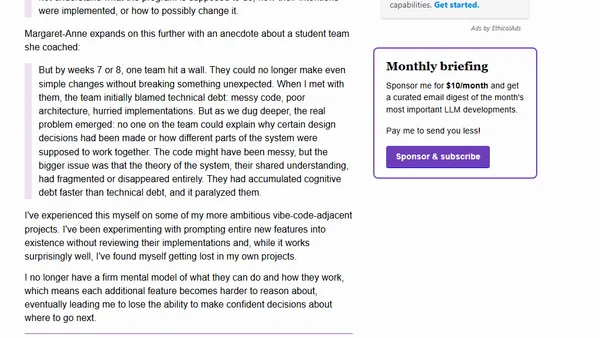
Explores how AI-generated code creates 'cognitive debt'—a loss of system understanding—which can paralyze developers more than technical debt.
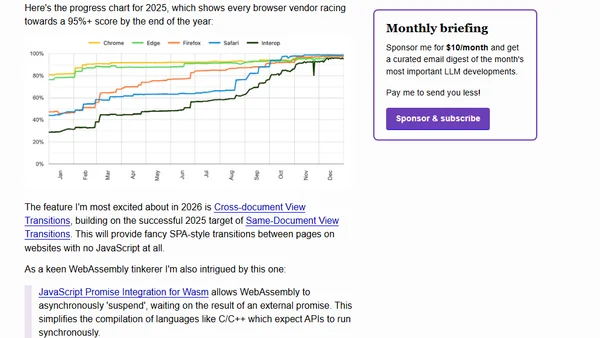
Announcing Interop 2026, a cross-browser initiative by major vendors to improve web platform feature compatibility and parity.
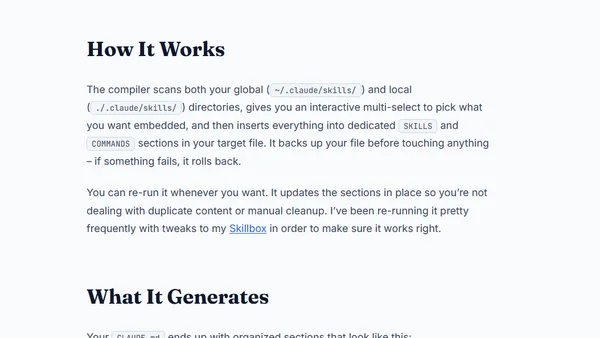
Introduces Agent Compiler, a CLI tool that embeds Claude Code skills directly into config files for guaranteed execution.
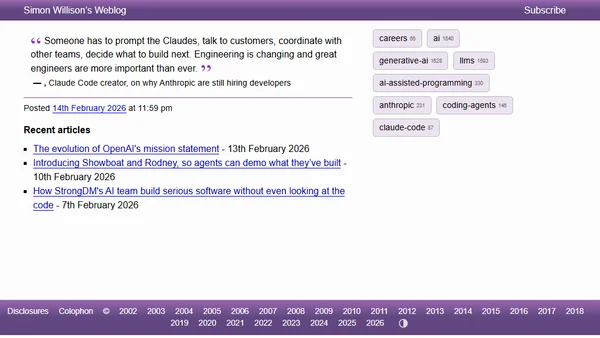
Anthropic's Claude Code creator discusses the evolving role of engineers and why developers are still crucial in the AI era.
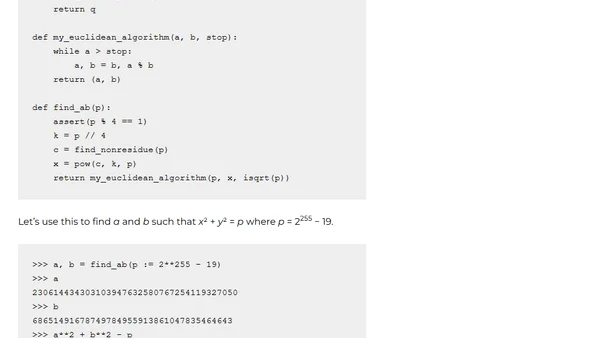
A technical guide implementing Wagon's algorithm in Python to solve x² + y² = p for large primes, using quadratic residues and a modified Euclidean algorithm.