Avoiding legacy systems
Explores the causes of legacy software and offers developer strategies to prevent codebases from becoming hard-to-maintain systems.
An open source developer explains why he deprecated his popular project in favor of a better alternative, advocating for progress over personal pride.
Analyzes how major software changes like Python 3 and asyncio can be 'traumatic' for developer communities, causing wasted effort and code rot.
Discusses the challenges of computational reproducibility in science, highlighting the Ten Years Reproducibility Challenge and using Go's stability as a model.
A developer discusses the implications of still using Python 2 in 2019, sharing slides from a conference talk on the topic.
A React team member shares personal strategies for coping with stress and feedback after major project releases like React Hooks.
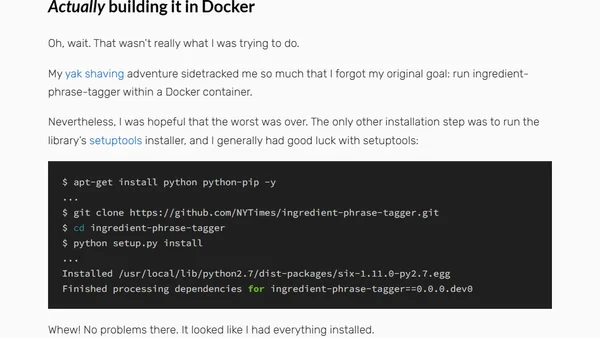
A developer recounts the process of reviving a deprecated open-source Python library for parsing recipe ingredients, detailing the challenges of legacy code.
An open source maintainer discusses the meaning and impact of the phrase 'patches welcome,' contrasting dismissive uses with constructive contributor engagement.
A guide for open source maintainers on how to gracefully close or reject unwanted pull requests and patch submissions.
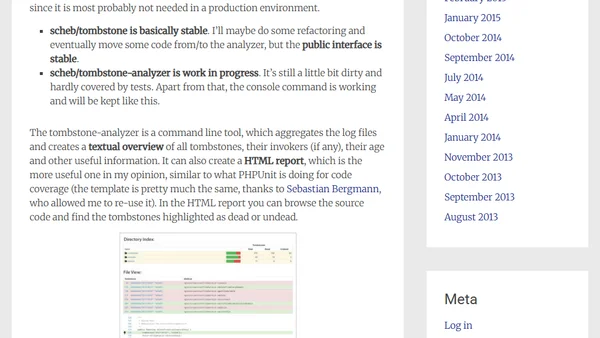
Introducing a PHP library for identifying dead code using executable markers called "tombstones" to safely clean up legacy projects.
Analyzes the tension between Red Hat's long-term enterprise support for outdated software like Python 2.6 and the burden it places on open-source community maintainers.
A reflection on the ethical responsibilities of open source maintainers, especially regarding security and user dependency, beyond the 'volunteer' excuse.
Developer releases VARMon 1.2.1 after fixing a long-standing bug, marking the first new version in four years.