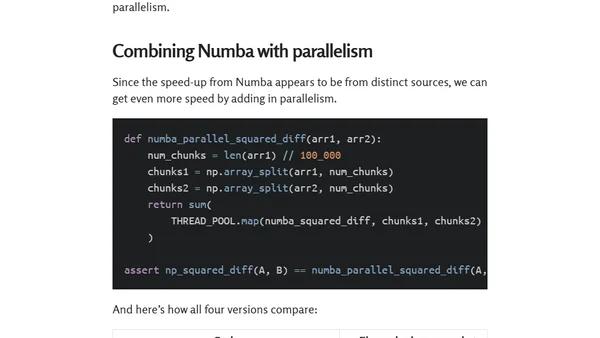
Speeding up NumPy with parallelism
A guide to accelerating NumPy computations using parallel processing with thread pools and Numba for optimized performance.
A developer documents their journey tackling the 'Billion Row Challenge' in Fortran, optimizing performance from over 2 minutes to under 6 seconds.
Exploring how Java code can be executed on GPUs for high-performance computing and machine learning, covering challenges and potential APIs.
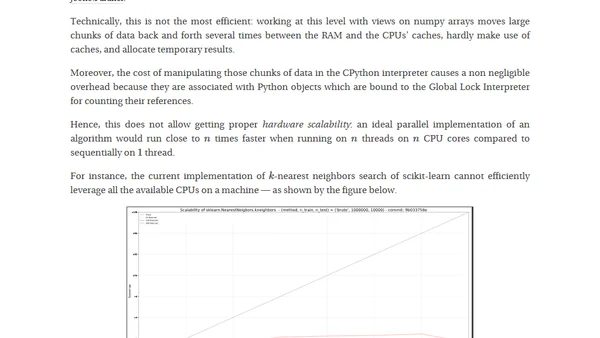
Analyzes performance improvements and hardware scalability of the PairwiseDistancesArgKmin algorithm in scikit-learn's k-nearest neighbors implementation.
Analyzes performance bottlenecks in scikit-learn's k-nearest neighbors search and introduces a new implementation for better CPU scalability.
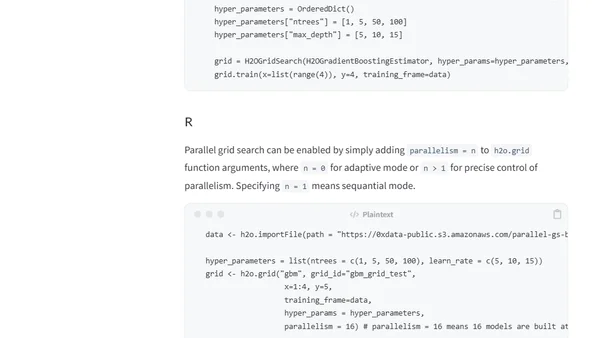
H2O version 3.28.0.1 introduces parallel grid search for faster, concurrent hyperparameter tuning in distributed machine learning.
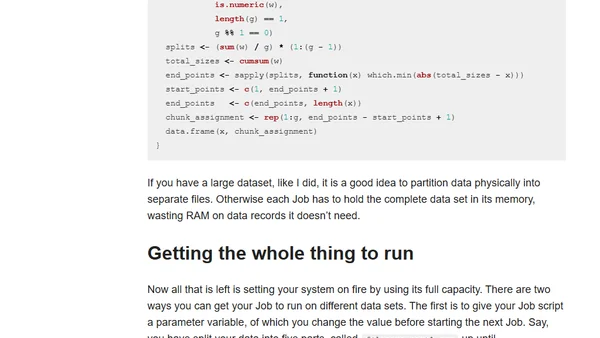
A guide to using RStudio's Jobs feature to train multiple Bayesian models in parallel, improving efficiency on multi-core systems.
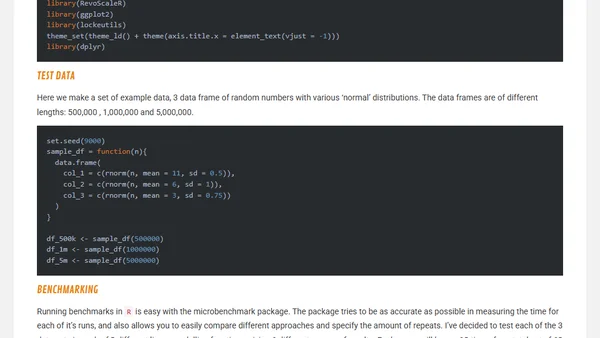
Explains how to use Microsoft R Client for multi-threaded parallel computing to speed up R calculations beyond vanilla R's single-threaded limits.
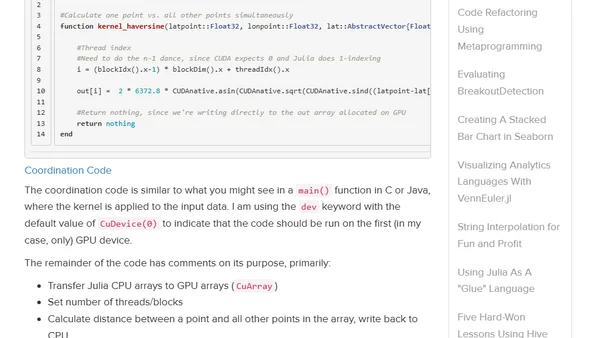
A tutorial on using Julia's CUDAnative.jl package to achieve 20x speedups by parallelizing haversine distance calculations on an NVIDIA GPU.
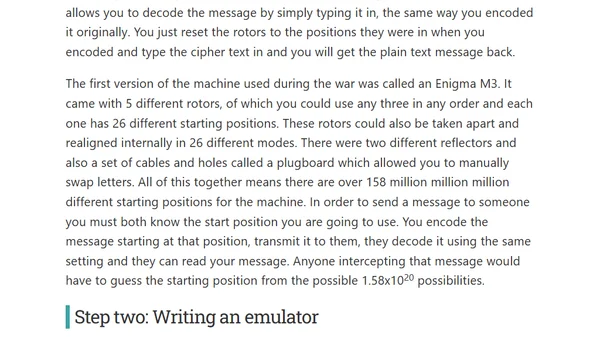
A developer explores parallel computing by writing a Go program to brute-force crack the WWII Enigma cipher, inspired by Alan Turing's work.
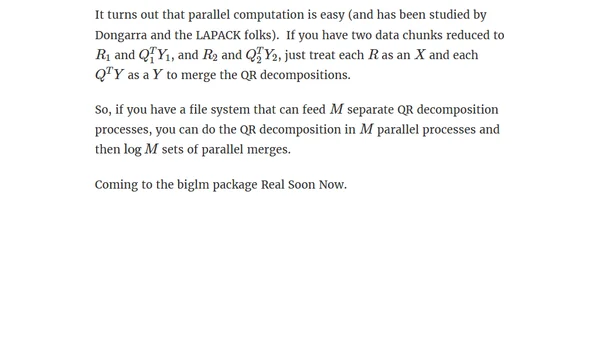
Explains how to parallelize QR decomposition for linear models on big data using R's biglm package and incremental merging.
Joblib 0.6 beta release introduces fast compressed persistence for Python objects and Python 3 support, improving I/O performance.
The scikit-learn team announces a community sprint on April 1st for improving the Python machine learning library, with in-person and remote participation.
A research group seeks a post-doc for the AzureBrain project, using Python for parallel computing and statistics on brain imaging/genetics data.
A recap of EuroSciPy 2010, highlighting the growth of the Python in science conference, key topics, and the community atmosphere.
Donald Knuth discusses his preference for Linux and critiques the shift to multi-core architecture, questioning its benefits for most software.