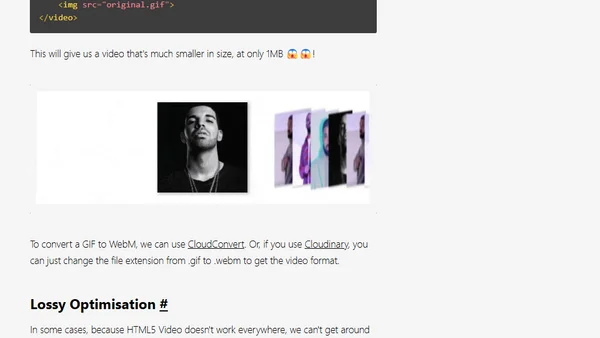
Optimising GIFs for the Web
Explains why GIFs are slow on the web and offers two solutions: replacing them with HTML5 video or using lossy compression tools.

The article explores how modern web bloat, like heavy CSS and JavaScript, makes websites unusable for people with slow, dialup-like internet connections.
A developer shares his journey advocating for and witnessing the launch of Speed Index and Visually Complete metrics in Dynatrace's products.
A guide to optimizing CSS image sprites for better web performance, covering file separation, PNG8, UTF-8 icons, and memory management.
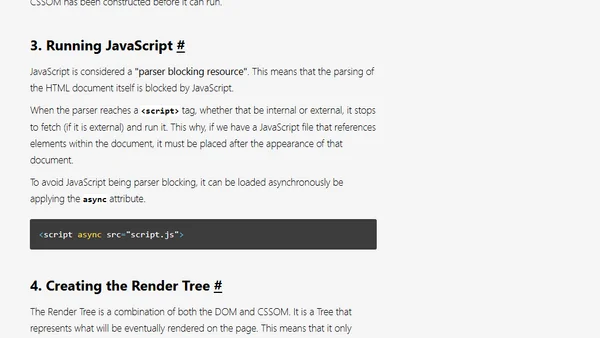
Explains the six stages of the browser's Critical Rendering Path (CRP) and how understanding it is key to improving website performance.
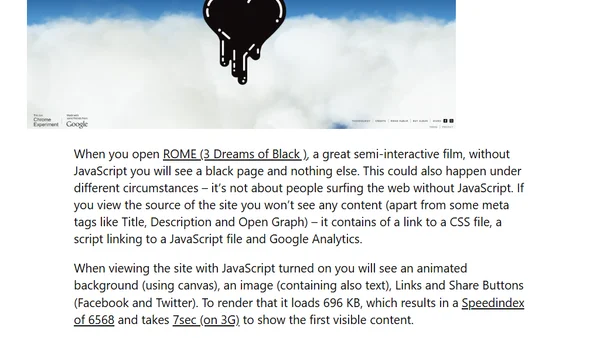
Analyzes how modern JavaScript frameworks like Preact handle component prioritization during boot, questioning if they optimize for key web performance metrics.
Key takeaways from Velocity Europe on web performance measurement, focusing on flawed KPIs, user perception, and the pitfalls of gaming metrics.
A guide for designers on improving website performance through image optimization and integrating performance into the design process.
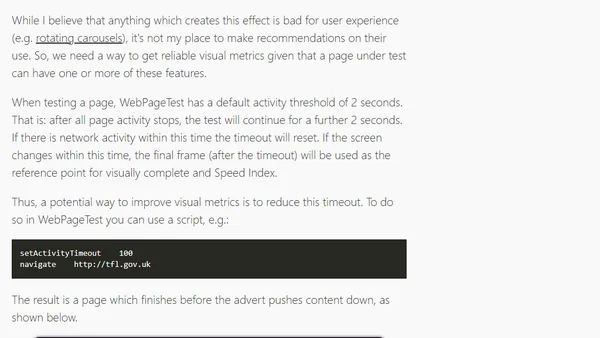
Explains how rotating carousels, ads, and popups distort web performance metrics like Speed Index and offers a technical fix using WebPageTest's activity timeout.
A performance comparison of different web techniques (CSS, SVG, Canvas, blend modes) for implementing grayscale image filters.
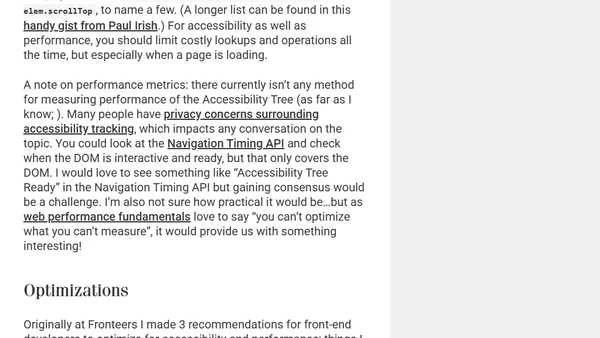
Explores the intersection of web performance and accessibility, focusing on how slow loading impacts users of assistive technologies like screen readers and keyboards.
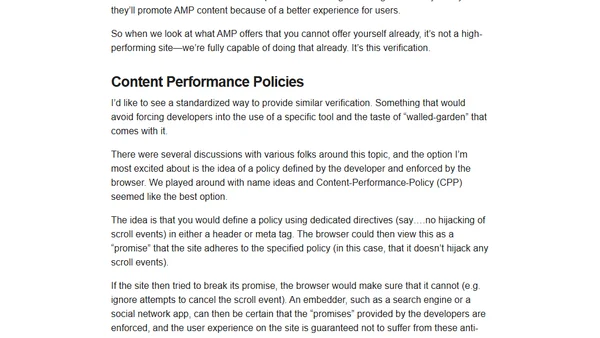
The article critiques Google's AMP framework, arguing it restricts web development freedom, and proposes a standardized alternative for performance verification.
A presentation explaining the 'Speed Index' web performance metric, including a video and slides from a conference talk.
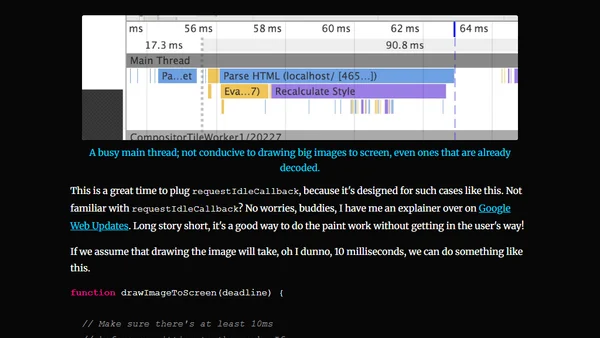
Explains how the experimental createImageBitmap API can move image decoding off the main thread to prevent jank and checkerboarding in web apps.
A consultant explains a method for prioritizing website speed improvements based on user impact and implementation difficulty.
Argues that all websites must begin with server-side rendered HTML for universal accessibility, even if they later use advanced JavaScript features.
The article discusses the AMP Project, an open-source framework for building fast mobile web pages, using a story about misaligned incentives as an analogy.
A technical case study on optimizing the loading performance of ruxit.com over three weeks without reducing page weight.
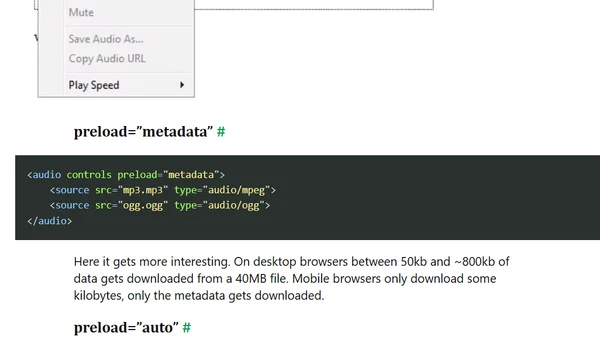
A technical analysis of the HTML5 audio element's preload attribute, its values, and their impact on browser download behavior.
Explores upcoming web performance technologies like HTTP/2, HTTPS, and the shift away from Flash, with a timeline for adoption.