Refactoring English: Month 14
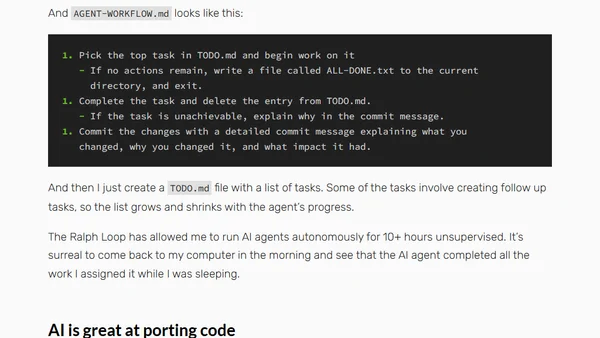
A software developer's monthly retrospective on writing a book about effective writing for developers, covering progress, AI experiments, and reader growth strategies.
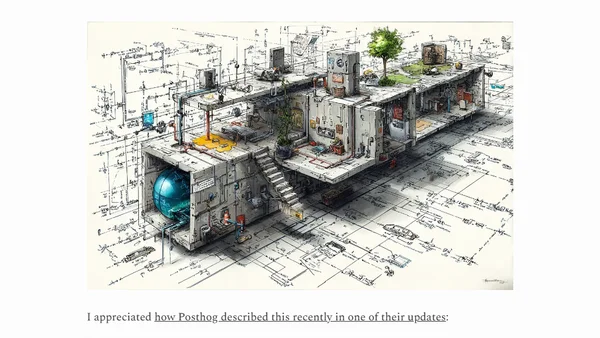
A critique of using AI to automate science, arguing that metrics have become goals, distorting scientific progress.
Argues for a new type of cybersecurity product focused on communicating safety and business value, not just technical metrics.
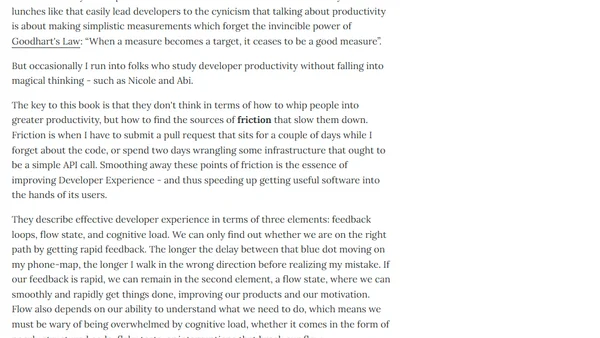
Martin Fowler's foreword for 'Frictionless', a book on improving software developer productivity by focusing on feedback loops, flow state, and cognitive load.
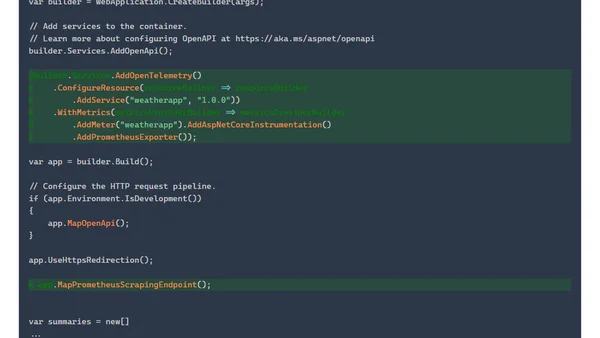
A tutorial on instrumenting a .NET Web API with OpenTelemetry Metrics, collecting them with Prometheus, and visualizing them in Grafana.
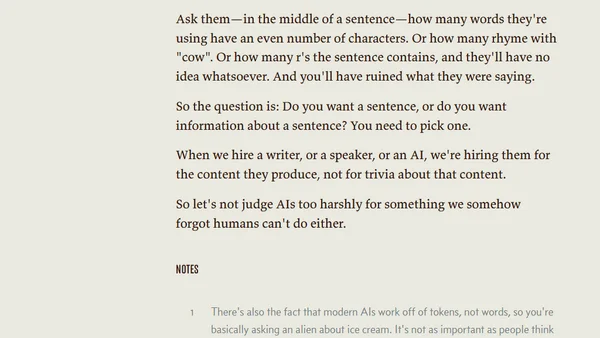
Critique of the 'how many r's in strawberry' test as a poor benchmark for AI intelligence, arguing it measures irrelevant trivia.
An engineer critiques the misapplication of OKRs in tech teams, arguing for simple, outcome-focused plans over rigid quarterly rituals.
A developer troubleshoots missing metrics in a .NET app using OpenTelemetry, finding a breaking change in the Collector.
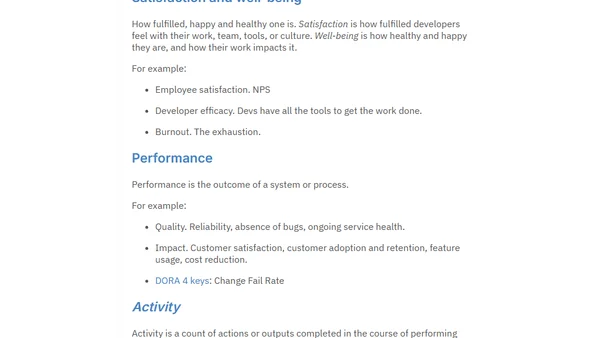
Explains the SPACE meta-framework for measuring developer productivity across Satisfaction, Performance, Activity, Communication, and Efficiency dimensions.
The article argues for versioning observability concepts, distinguishing between traditional 'three pillars' (1.0) and modern event-based (2.0) approaches.
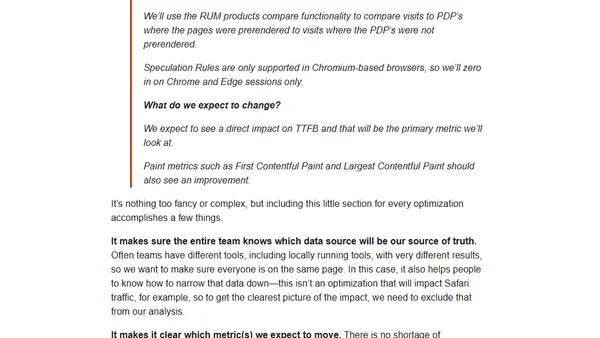
A guide to setting clear metrics and measurement strategies before implementing web performance optimizations to ensure measurable impact.
Explains how Kubernetes exposes metrics for monitoring, covering the Metrics API, Kubelet/cAdvisor, and different metric categories.
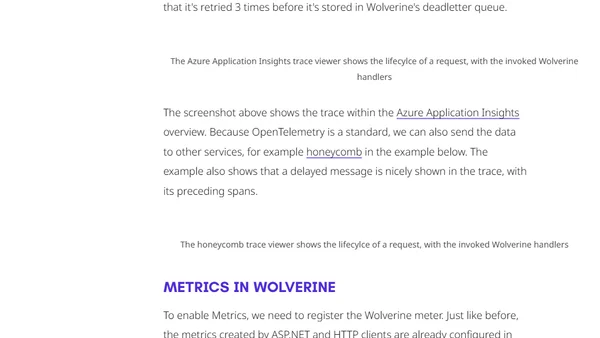
Explores how to enable OpenTelemetry observability in Wolverine, highlighting its built-in tracing and metrics capabilities.
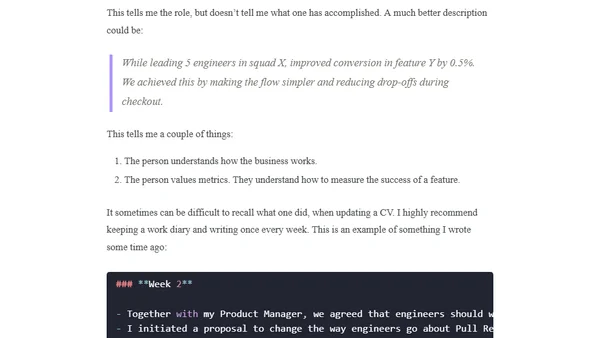
Tips for writing effective CVs for tech roles, focusing on quantifying achievements and keeping a work diary to track accomplishments.
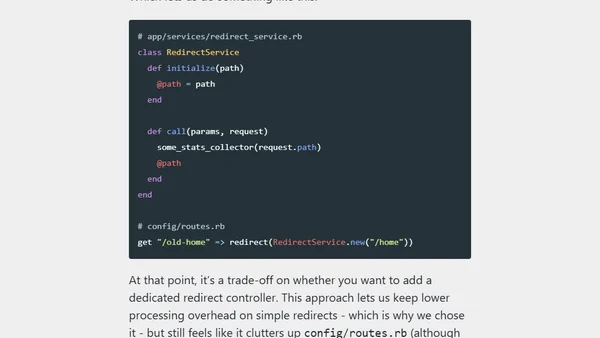
A technical guide on how to capture usage metrics for redirects in a Ruby on Rails application to aid in cleaning up legacy routes.
A critique of traditional metrics for observability, arguing they are limited for debugging unknown issues but still valuable for system health monitoring.
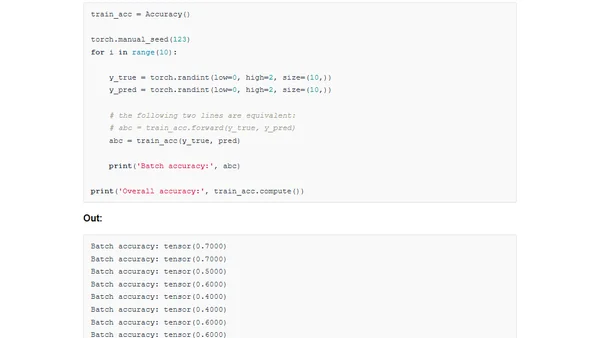
Explains the difference between .update() and .forward() in TorchMetrics, a PyTorch library for tracking model performance during training.
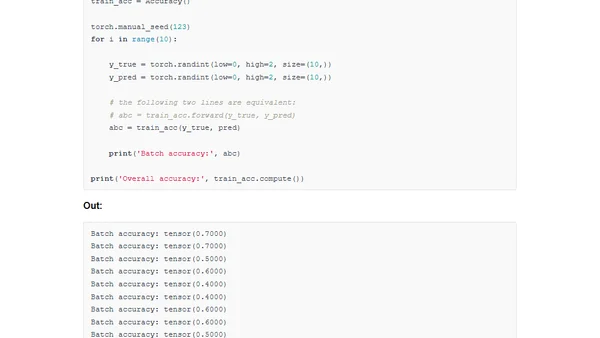
Explains the difference between .update() and .forward() methods in the TorchMetrics library for evaluating PyTorch models.
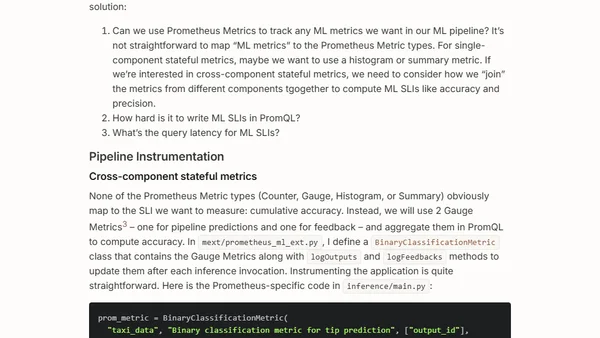
Explores the challenges of using Prometheus for ML pipeline monitoring, highlighting terminology issues and technical inadequacies.
Explains why Prometheus is fundamentally a monitoring system, not just a time-series database, and clarifies its design and query behavior.