Reckoning: Part 3 — Caprock
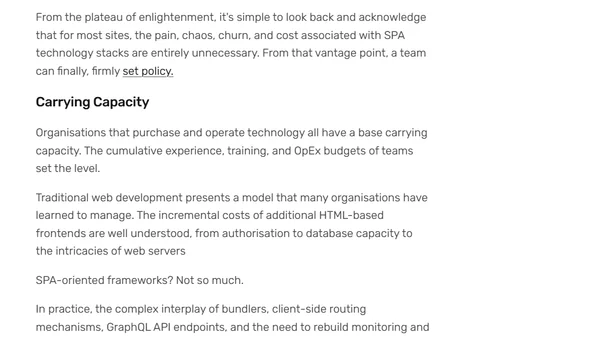
Analyzes how JavaScript-heavy web architectures harm public service sites, causing slow performance and access barriers for users on low-end devices.
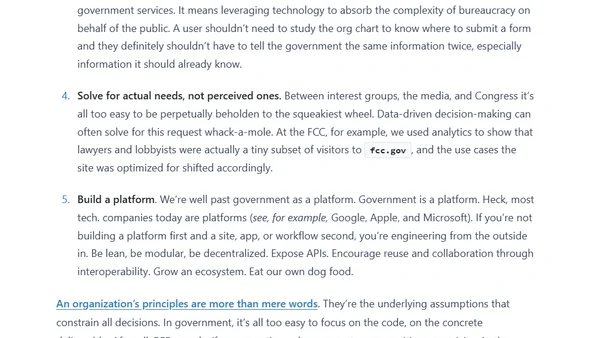
A former Presidential Innovation Fellow shares five core principles for successful government IT projects, focusing on culture, user needs, and modern development.
Explains the distinct missions and approaches of two U.S. government tech modernization groups: 18F and the U.S. Digital Service (USDS).
A developer's personal account of joining the US Digital Service at the VA to improve government technology and serve veterans, with a call for others to contribute.
Explains why government agencies can't use standard online service terms and how to negotiate custom agreements for the federal market.
A former government technologist argues for a strong White House open source policy to boost innovation, efficiency, and taxpayer ROI in federal IT.
Explains the role of a Government Evangelist at GitHub, focusing on helping government agencies adopt open source software and practices.
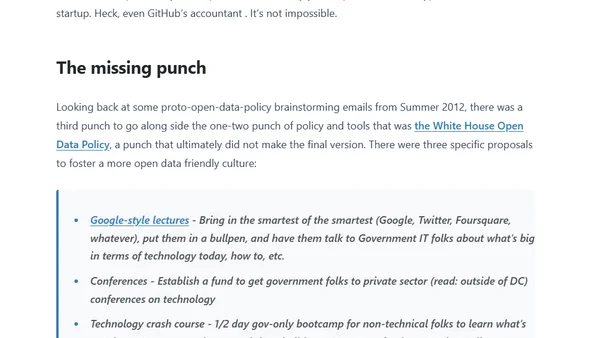
Argues that successful government tech innovation depends more on changing bureaucratic culture than on implementing new technology.
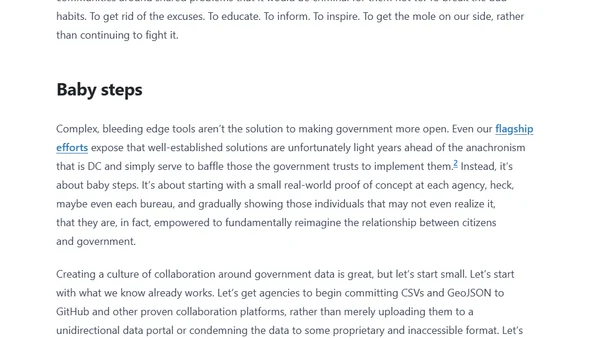
Argues that in government IT, the main challenge isn't technology but cultural adoption and bureaucratic inertia.