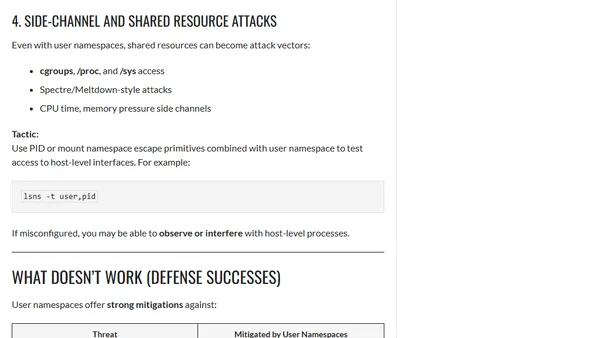
User Namespaces in Kubernetes: Perspectives on Isolation and Escape
Analyzes Kubernetes User Namespaces from an offensive security perspective, covering isolation benefits, potential misconfigurations, and escape vectors.
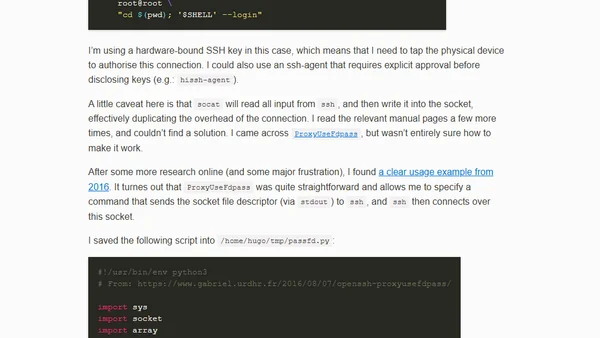
Explores using a local SSH server as a secure alternative to sudo for privilege management, avoiding setuid binaries.
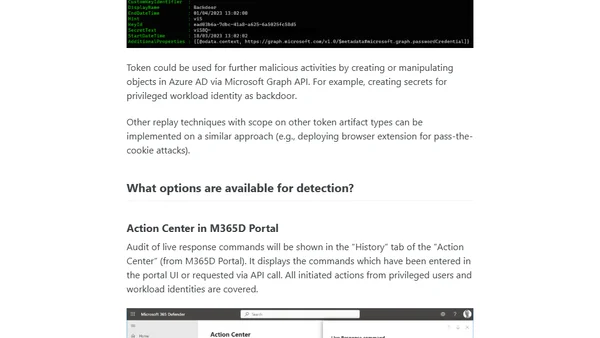
Analyzes the abuse of Microsoft 365 Defender's Live Response feature for privilege escalation on Tier0 assets and discusses detection methods.
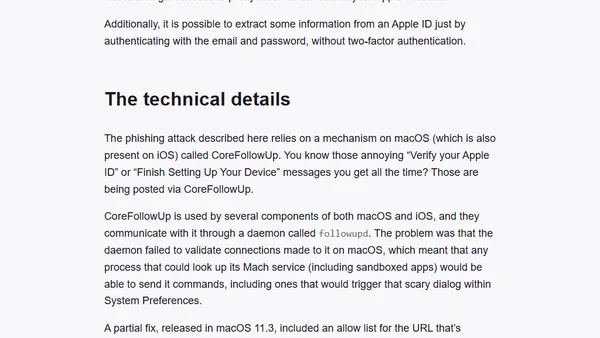
A macOS bug allowed malicious apps to spoof Apple ID verification alerts within System Preferences, enabling sophisticated phishing attacks.
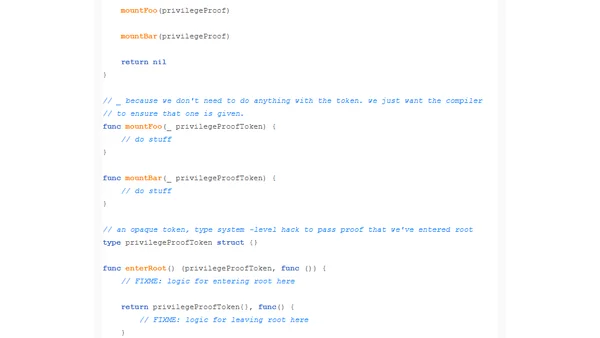
A programming pattern using opaque tokens and the type system to ensure functions requiring root privileges are only called from within a root context.
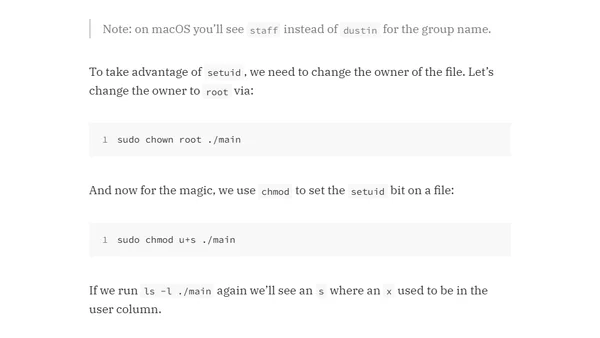
Explains the setuid bit in Linux/macOS to run executables with elevated privileges without granting users full root access.
Explains the security risks of the SQL Server 'Trustworthy' database setting and how it can lead to sysadmin privilege escalation.
Discusses critical SQL Server security patches (MS15-058) and emphasizes the importance of following security best practices like least-privilege access.
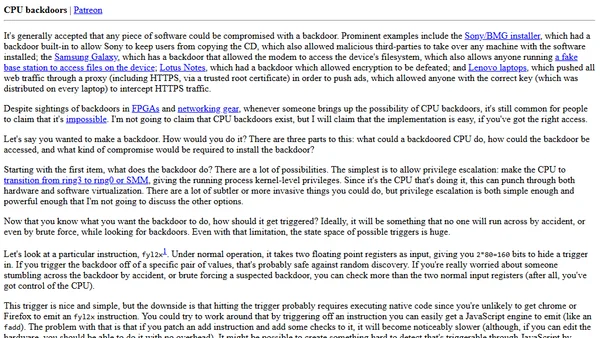
Explores the feasibility of CPU backdoors, how they could be implemented, and the security risks they pose.
Explains new SQL Server 2014 permissions like IMPERSONATE ANY LOGIN and how they interact with CONTROL SERVER for security and privilege escalation.
Explores SQL Server privilege escalation from CONTROL SERVER to sysadmin, debunking myths and comparing to Oracle's security model.