Making Web Scraping Super Reliable
A developer shares technical challenges and solutions for building reliable web scraping features for a SaaS website monitoring tool.
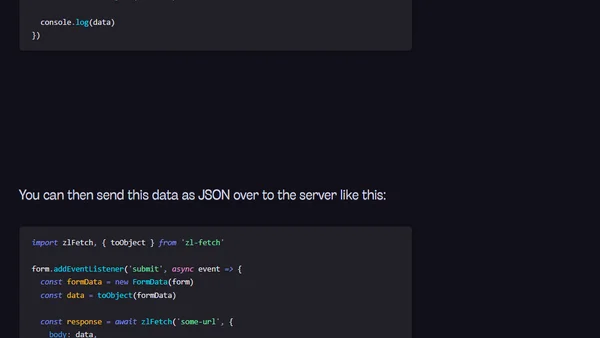
Announcing zlFetch's support for FormData and its utilities for converting FormData to objects and query strings.
A tutorial on implementing multipart/form-data file uploads in Swift without third-party libraries, covering HTTP theory and practical code.
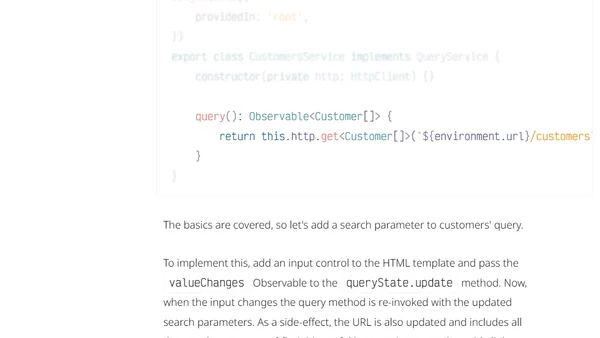
Introducing ngx-query-state, an Angular library to simplify HTTP data fetching and state management, inspired by tools like React Query.
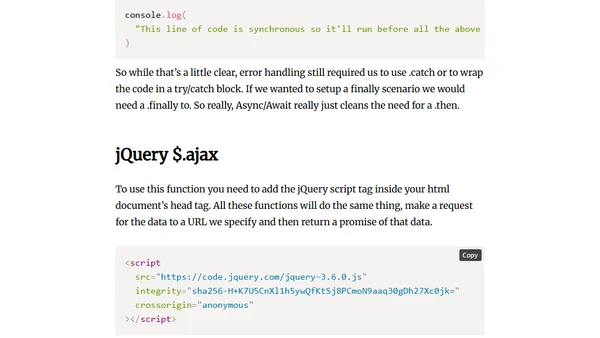
A guide to making AJAX/HTTP requests in frontend JavaScript, covering APIs, Promises, and tools like jQuery, Fetch, and Axios.
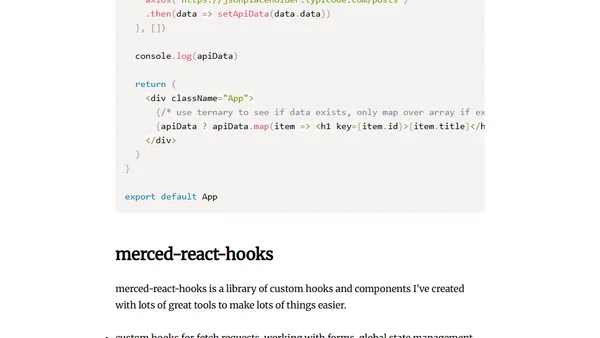
A tutorial comparing three methods for making API requests in React: using fetch/axios, the merced-react-hooks library, and react-request.
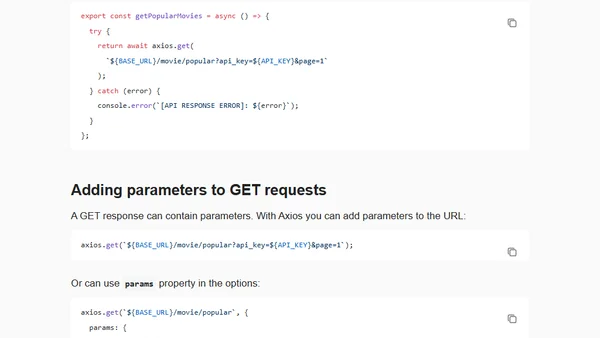
A tutorial on how to make GET requests and pass parameters using the Axios HTTP client library in JavaScript.
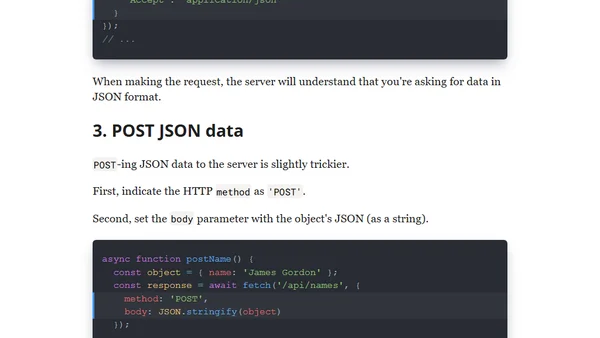
A tutorial on using the JavaScript fetch() API to make GET and POST requests with JSON data, including setting headers and parsing responses.
Explains PHP 8.1 fibers for async programming, their conceptual use, and why they're a low-level tool not meant for direct application code.
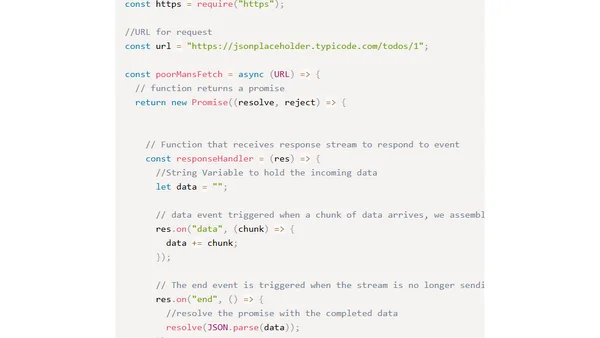
Explains Node.js streams using the https.get method to handle data transfer incrementally, with code examples.
A guide on adding TypeScript types to the fetch API, using a GraphQL Pokemon API example from EpicReact.dev workshops.
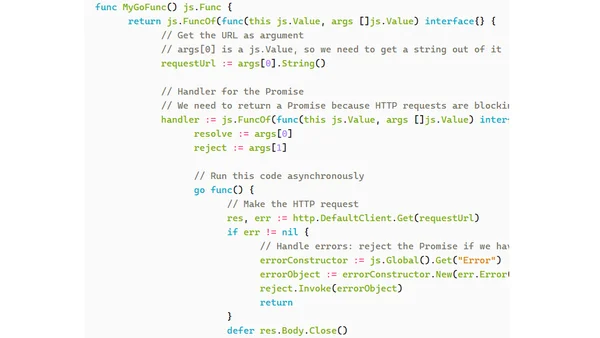
A technical guide on using Go with WebAssembly to create JavaScript objects, Promises, HTTP requests, and streaming in the browser.
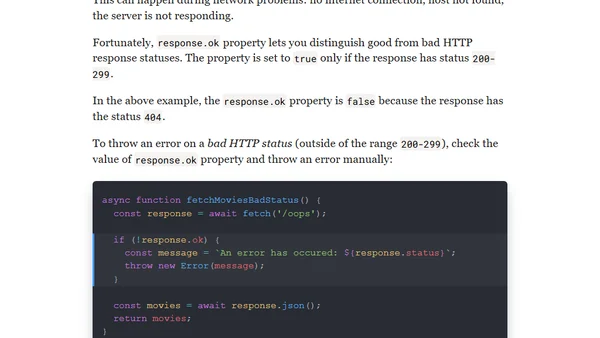
A guide to using the JavaScript Fetch API with async/await syntax, covering data fetching, error handling, and request cancellation.
A guide to building a polite web crawler that respects robots.txt, manages crawl frequency, and avoids overloading servers, with an example in .NET.
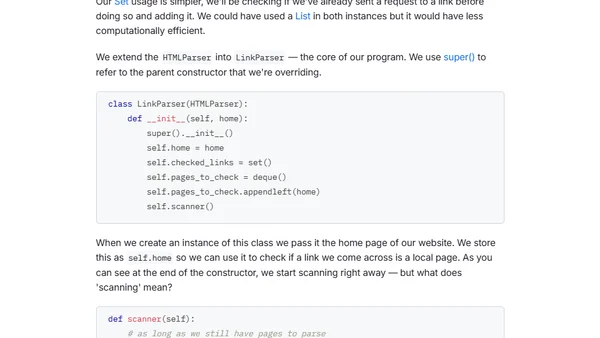
A tutorial on building a Python bot to crawl a website and identify dead links and images using the standard library.
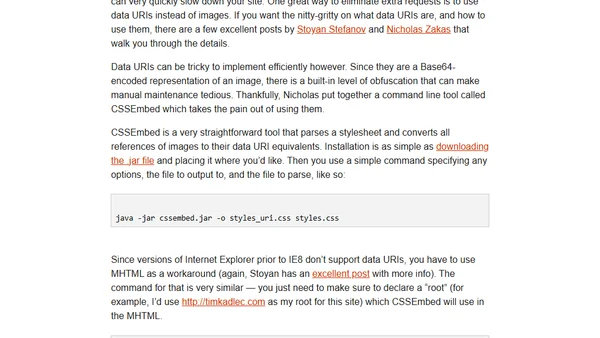
Introduces CSSEmbed, a tool for converting CSS image references to data URIs to reduce HTTP requests and improve website load times.
Explores the size threshold for using inline scripts/styles vs. external files, considering HTTP overhead, caching, and performance trade-offs.
A review of the SpriteMe bookmarklet, a tool for creating CSS sprites to optimize website performance by reducing HTTP requests.
Explains the difference between encode() and encodeURIComponent() in JavaScript for correctly handling special characters like Swedish å, ä, ö in URI parameters.