Why your retrospectives don't work and how to fix them
Analyzes why team retrospectives often fail to drive improvement and offers practical solutions inspired by Toyota's kaizen principles.
Lucas F. Costa is a software engineer and writer sharing thoughtful perspectives on JavaScript, TypeScript, Rust, and open-source development. A former Chai.js and Sinon.js maintainer and YC-backed founder, he writes about testing, code quality, and well-engineered software.
47 articles from this blog
Analyzes why team retrospectives often fail to drive improvement and offers practical solutions inspired by Toyota's kaizen principles.
A guide on how to successfully launch a technical project on Hacker News, covering title creation, audience targeting, and presentation best practices.
Argues that product backlogs are harmful, never shrink, and proposes working without them for better productivity and team alignment.
A satirical guide on how to misuse and distort the Scrum framework, leading to failure, to highlight common Agile anti-patterns.
Argues that Kanban is more adaptable and effective than Scrum for software teams, explaining how Kanban principles enhance responsiveness and decision-making.
Argues that deadlines harm software quality and morale, proposing 'preemption points' and queueing disciplines as better alternatives.
A developer recounts how automating a game with Perl bots as a teenager sparked his passion for programming and software engineering.
Argues that velocity is a poor engineering metric and introduces better metrics for measuring team performance and productivity.
Explains the 'Minimum Viable Nothing' concept for validating product ideas without building them, focusing on testing willingness to pay.
Analyzes why daily stand-ups often fail in software teams and provides actionable advice to fix them by refocusing on core Agile principles.
Explores how embracing uncertainty in software product development can lead to greater profitability, using betting analogies to explain economic principles.
A satirical critique of over-engineered Agile frameworks, proposing the simple 'Talk To Your Customers' (TTYC) methodology as a disruptive alternative.
Explains why finishing tasks before starting new ones improves team productivity and predictability, using burger-making analogies and Monte Carlo simulations.
Critique of long-term software development plans, explaining why they fail and offering alternative approaches for product teams.
Explains how high capacity utilization creates queues, hurting team performance, using a bagel shop analogy and software development simulations.
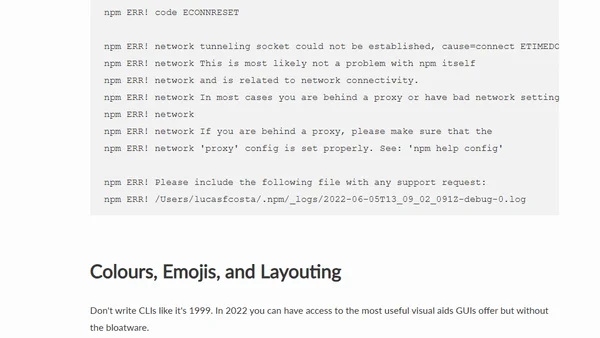
Explores UX design patterns for command-line interface (CLI) tools, focusing on improving onboarding, discoverability, and error prevention.
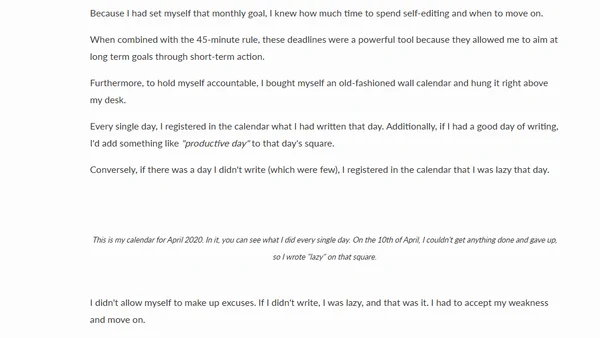
A JavaScript developer shares his disciplined daily routine and habits for successfully writing a 500-page technical book on JavaScript Testing.
Explains how to use Monte Carlo simulations for more accurate software project forecasting instead of traditional estimation methods.
Critiques the 'code faster' management approach, arguing for quantifying economic value and prioritizing work to maximize profit with limited resources.
Discusses the balance between too little and too much specification in software development, advocating for concise, intent-focused specs.