The b element
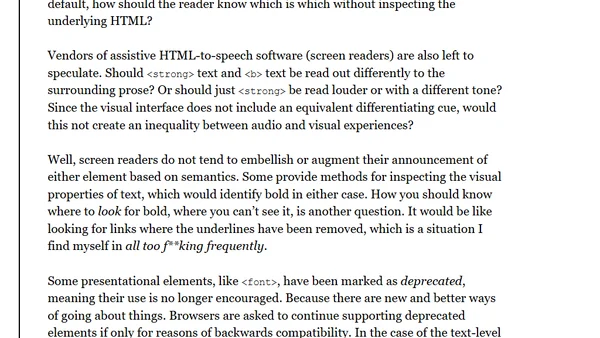
Explores the semantic evolution of the HTML <b> element from a presentational 'bold' tag to its current 'Bring Attention To' role, contrasting it with <strong>.
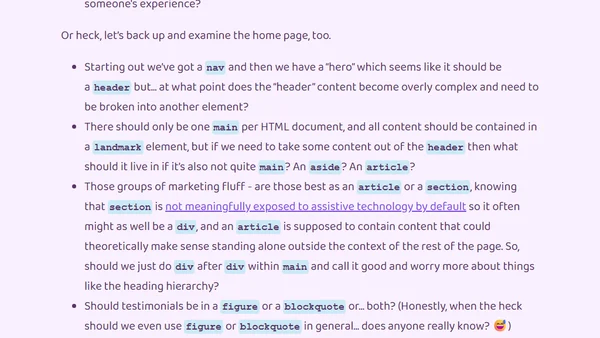
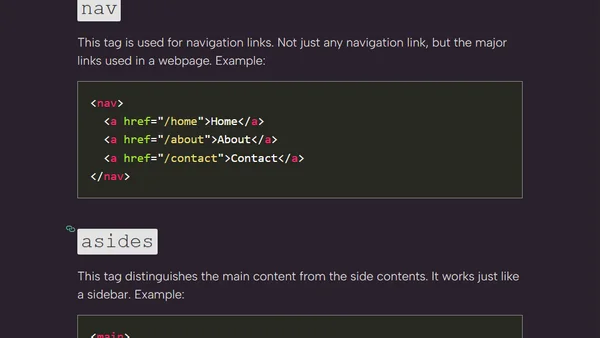
A web developer discusses the complexities and gray areas of semantic HTML, questioning best practices for elements like headers, asides, and tables of contents.
Argues for adding a new <search> HTML element as semantic sugar for the ARIA search role, improving web accessibility and native HTML parity.
Explains semantic HTML, its importance for accessibility and SEO, and provides examples of semantic tags and best practices for document structure.
An introduction to web accessibility principles, explaining why it's important and providing practical HTML coding examples for inclusive design.
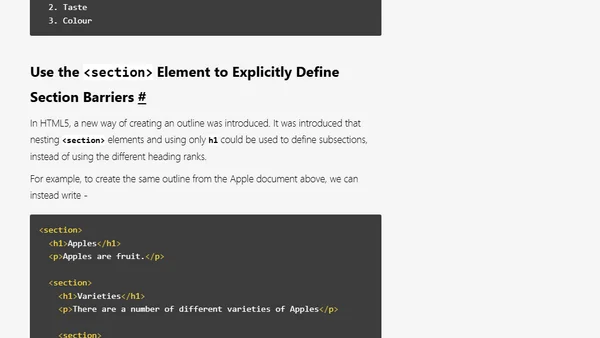
Explains how to use HTML heading elements (h1-h6) and the <section> tag to create a proper document outline for accessibility and structure.
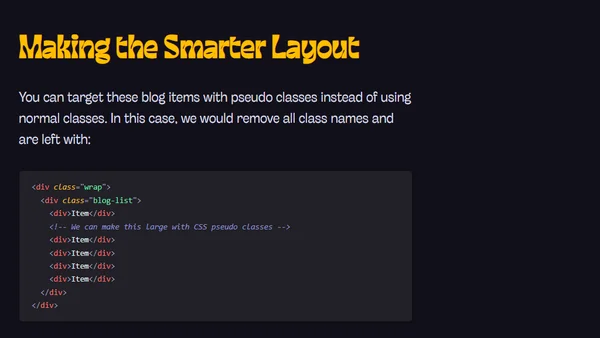
Explores creating semantic, self-correcting CSS layouts using pseudo-classes and the Susy framework to reduce reliance on presentational HTML classes.
A developer's personal recap of attending the CSUN 2014 conference, focusing on learning about web accessibility, ARIA, and meeting experts in the field.
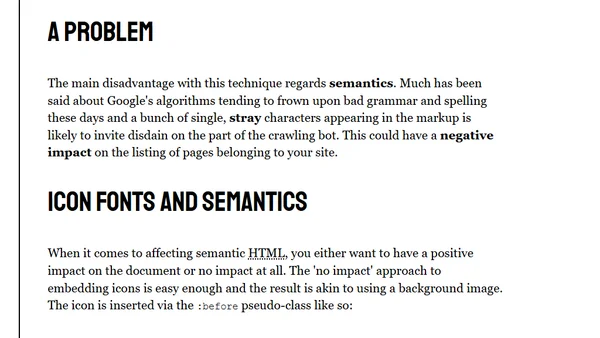
Explores using web fonts for UI icons, covering advantages like scalability and color control, and addressing semantic HTML concerns.
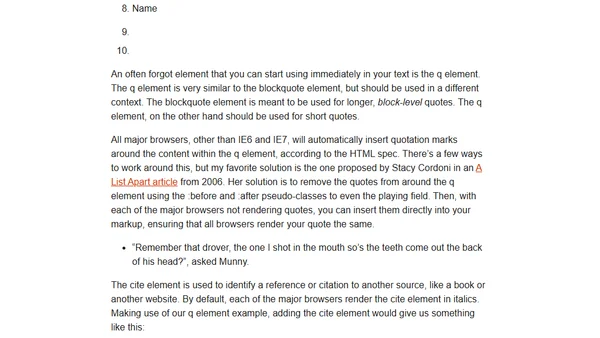
Explains how to build a stronger, more semantic DOM using underutilized HTML elements like fieldset, q, cite, and dfn for better structure and accessibility.