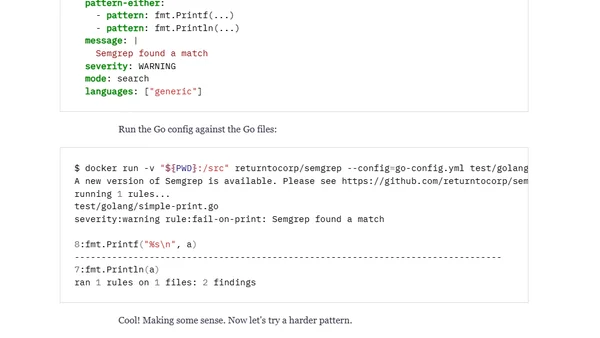
Static analysis with semgrep: practical examples using Docker
A tutorial on setting up Semgrep for static code analysis using Docker, with practical examples for writing custom linting rules.

DEV Community members pair program to tackle an accessibility issue in the Forem codebase, live-streaming their progress.
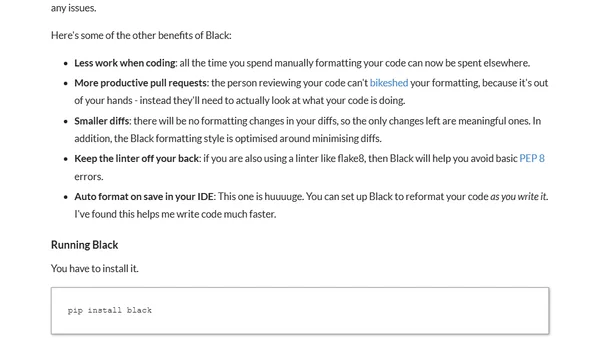
An introduction to Black, a Python code formatter that automatically formats code to eliminate debates and save time on manual formatting.
A TSLint maintainer reflects on the project's history, challenges, and the community's transition to ESLint for TypeScript linting.
A technical guide on migrating from TSLint to ESLint using the tslint-to-eslint-config utility, covering rule conversion and configuration mapping.
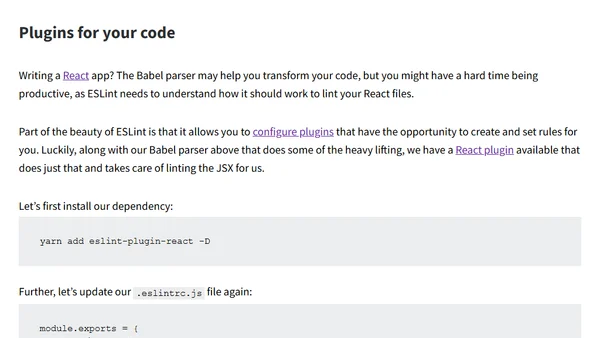
Explains what code linting is, its benefits for catching errors and enforcing style, and provides a basic setup guide for JavaScript/React.
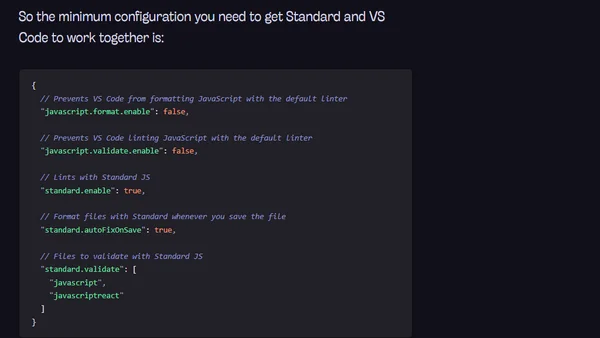
How to fix formatting conflicts when integrating JavaScript Standard Style with VS Code by disabling the default formatter.
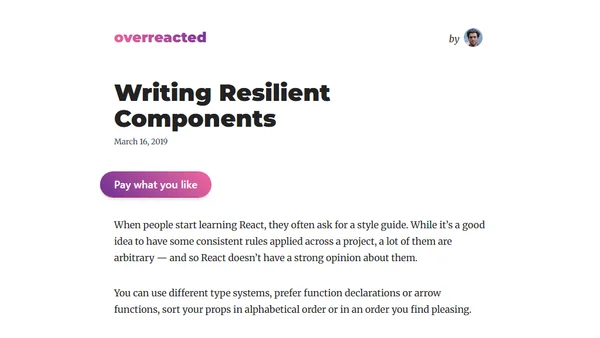
A guide to writing robust React components, focusing on practical design principles over arbitrary style guide rules.
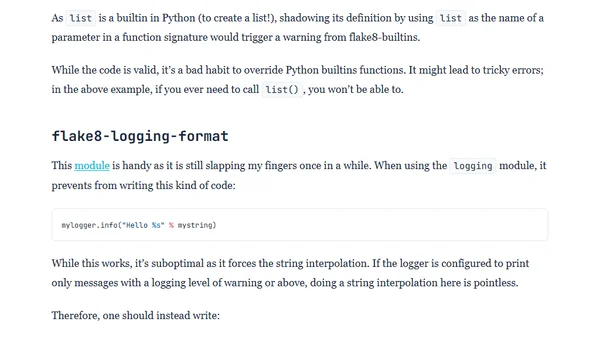
A guide to essential flake8 extensions for improving Python code quality, covering import order, exception handling, and logging best practices.
An introduction to Black, the uncompromising Python code formatter that automatically styles code to PEP 8 standards and beyond.
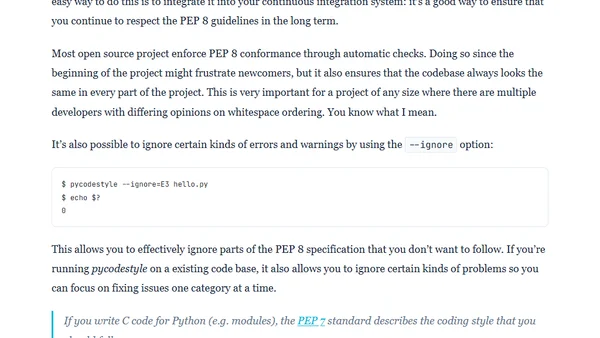
A guide to automating Python code style checks using PEP 8 and tools like pycodestyle to ensure consistency and avoid manual reviews.
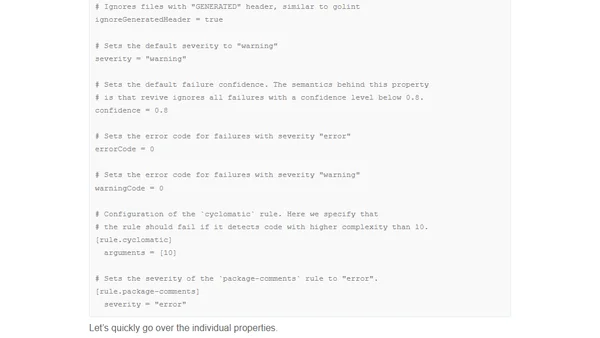
Introducing Revive, a fast and extensible linter for Go that improves upon golint with configuration, custom rules, and better performance.
A guide to implementing effective code reviews, covering tone, automation, and best practices for teams.
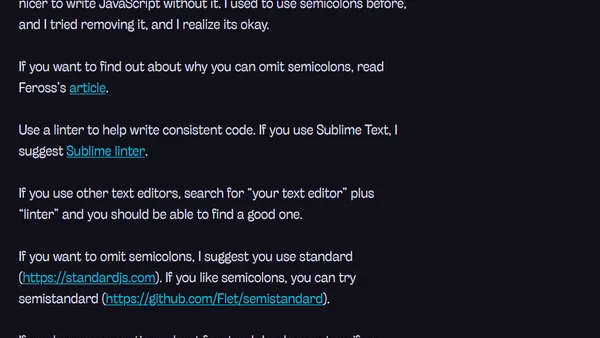
Explores the debate on using semicolons in JavaScript, concluding it's a matter of preference and recommending linters for consistency.
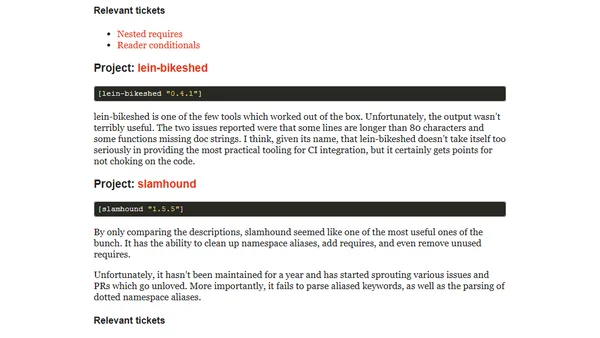
An analysis of nine code quality tools for Clojure, evaluating their functionality and issues in a real-world project with cljc files and spec.
Explains why JavaScript's Automatic Semicolon Insertion (ASI) makes 'never use semicolons' a valid approach and why 'always use semicolons' is misleading.