The complete guide for open sourcing video games
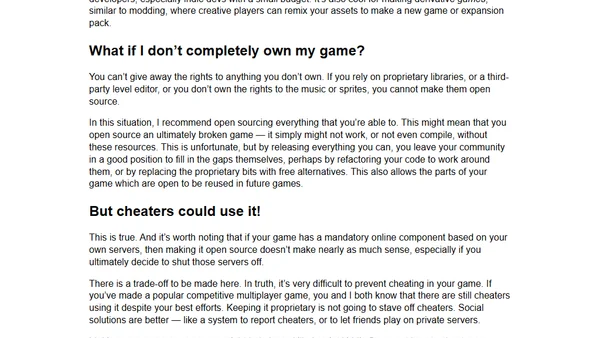
A guide exploring the benefits, challenges, and practical steps for open sourcing commercial video games for preservation and legacy.
A CTO shares how a small game studio self-published a high-quality MMO prototype in just four months, defying traditional AAA development models.
An exploration of monochrome image dithering, inspired by the game 'Return of the Obra Dinn', covering techniques, history, and technical implementation.
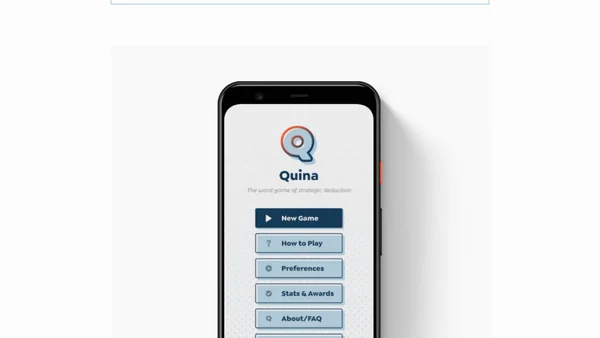
Developer announces Quina, their first standalone word game app built with web technologies and published on the Google Play Store.
A developer shares insights and tips from a presentation on using Perforce for game development tools and infrastructure.
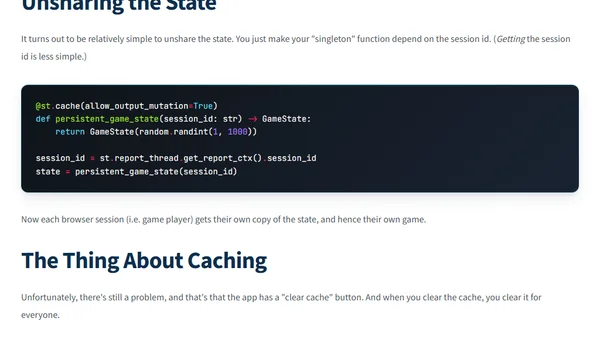
A developer shares lessons learned from creating simple games using Streamlit, focusing on managing game state within Streamlit's stateless paradigm.
A developer explains the motivation and technical challenges behind building a text-adventure game as a full-stack learning project.
A software developer shares the start of a passion project to build a text-adventure game as a web app using F# and React/TypeScript.
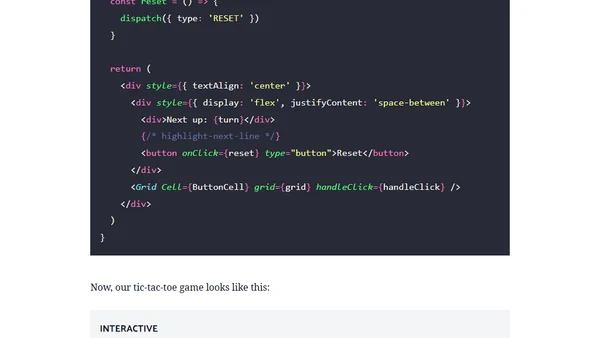
A tutorial on building a Tic-Tac-Toe game in React, covering game state, grid logic, and component structure.
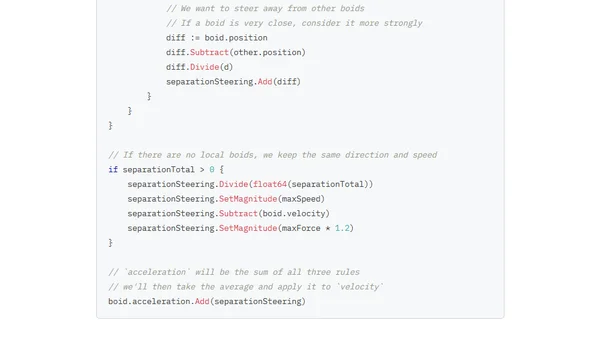
A tutorial on implementing the Boids flocking simulation algorithm using the Go programming language and WebAssembly, with the Ebiten game library.
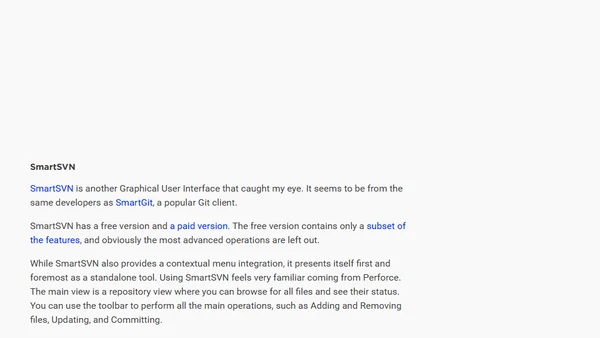
Analyzes Subversion (SVN) as a source control solution for game development, discussing its history, features, and relevance for indie teams.
An evaluation of Plastic SCM, a version control system designed for game development, comparing its features and history to Git and Perforce.
Argues that achieving the 95th percentile in many activities is not impressive, using examples from video games and real-world skills.
Explores why Perforce is the dominant source control system in AAA and large-scale game development, comparing it to Git.
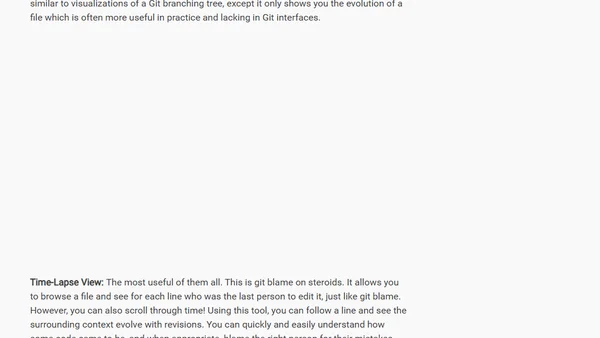
Analyzes Git's strengths and limitations for game development, introducing GitCentral as a tailored solution.
An overview of the Godot game engine, comparing it to other options and showcasing its features for 2D/3D game development.
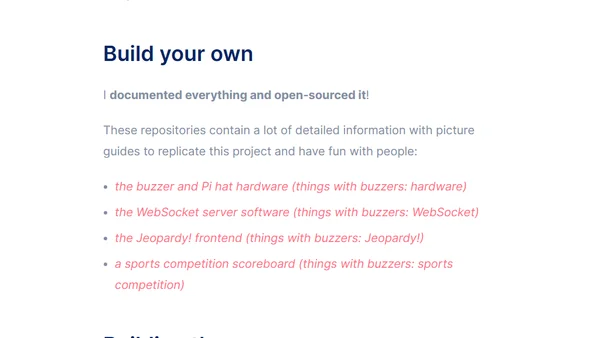
A guide to building custom game show buzzers using Raspberry Pi, a custom PCB, and a WebSocket server, with open-source code.
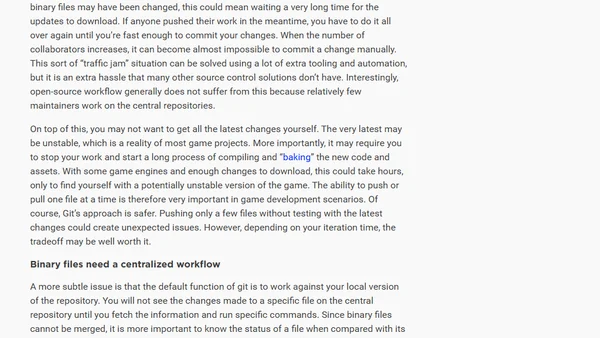
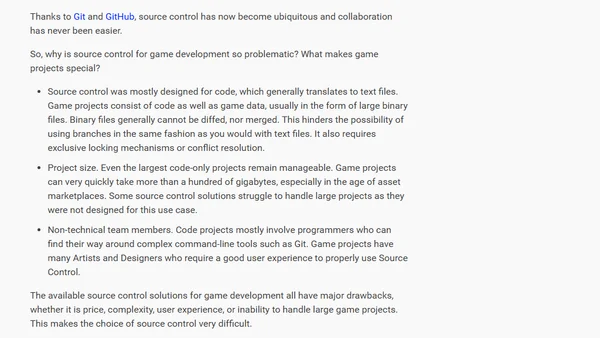
Analyzes source control options for game development, focusing on challenges with binary assets and team workflows.
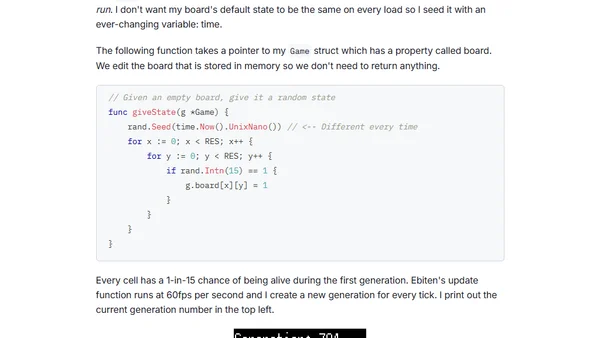
A developer shares their experience learning Go by building an interactive Conway's Game of Life using the Ebiten game library.
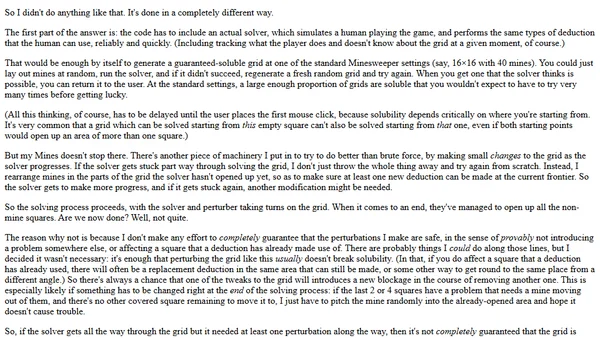
Explains how the Mines puzzle game generates Minesweeper grids that are guaranteed to be solvable without guesswork, using a solver and grid adjustments.