CSS forces
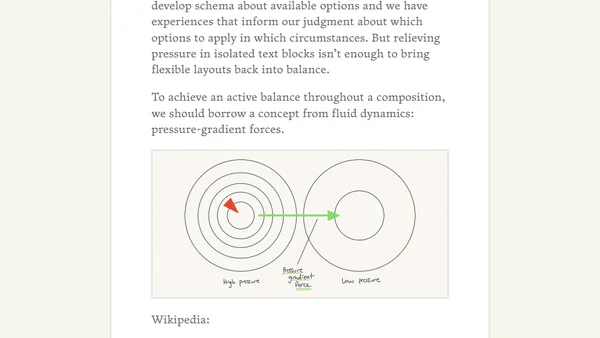
Explores the concept of 'CSS forces' as a design principle for creating balanced, fluid layouts by distributing pressure and relief across a composition.
Developer argues against using UI frameworks like Bootstrap, advocating for custom CSS and strategies to build professional apps.
A web developer's strategy for using modern CSS features while ensuring compatibility with older browsers through progressive enhancement and fallbacks.
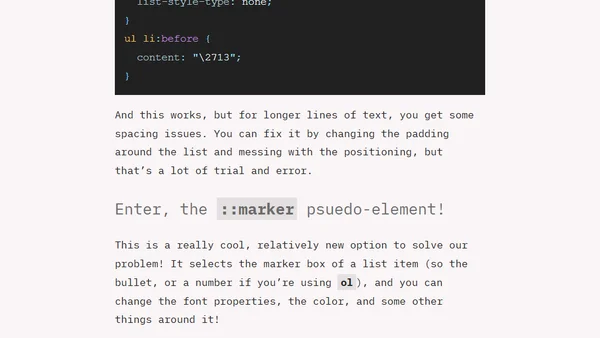
Learn to use the CSS ::marker pseudo-element to style list bullets with Unicode characters, solving text alignment issues.
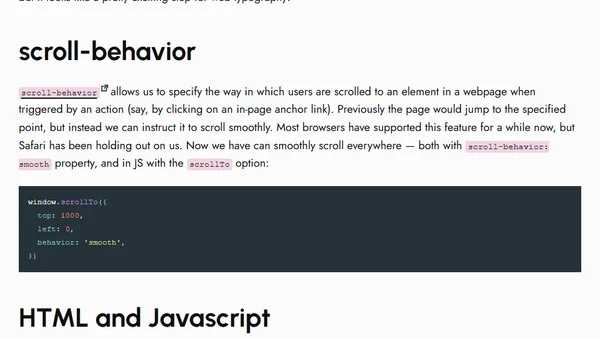
Overview of new CSS, HTML, and JavaScript features recently implemented in Safari and other browsers, including :has(), trigonometric functions, and viewport units.
A developer explains how understanding CSS layout algorithms, not just properties, leads to more predictable and robust styling.
Explains the modern CSS syntax for using rgb/hsl with alpha transparency, eliminating the need for rgba/hsla functions.
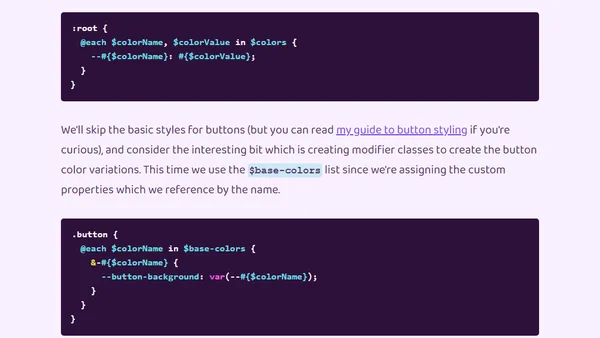
A developer explains why they continue to use Sass for CSS, highlighting its benefits for organization, variables, and loops in team projects.
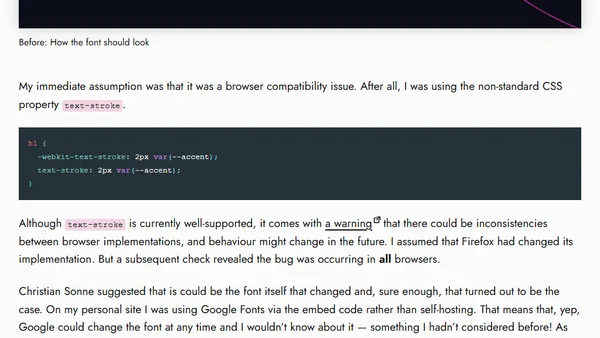
Discusses a font rendering bug caused by Google Fonts updates, arguing for self-hosting fonts for control and performance.
A developer shares their journey creating technical content, including blogs, videos, and open-source projects, and offers tips for others.
A developer adds a user-requested task management feature and CSS styling to a PDF report for a SaaS application.
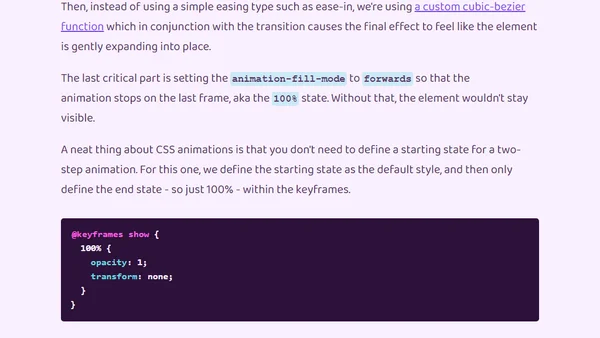
A CSS technique using keyframes to animate newly added DOM elements without needing JavaScript setTimeout or class juggling.
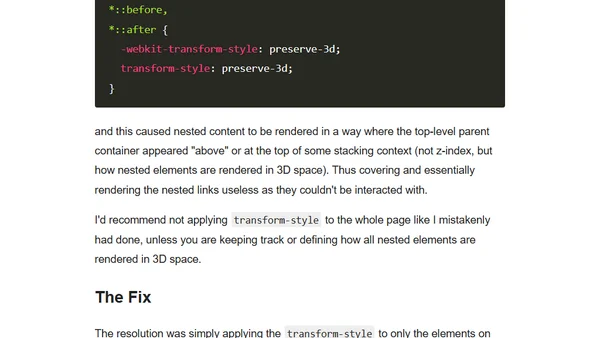
A developer explains how a CSS transform-style rule broke nested links on their website and shares the debugging process and fix.
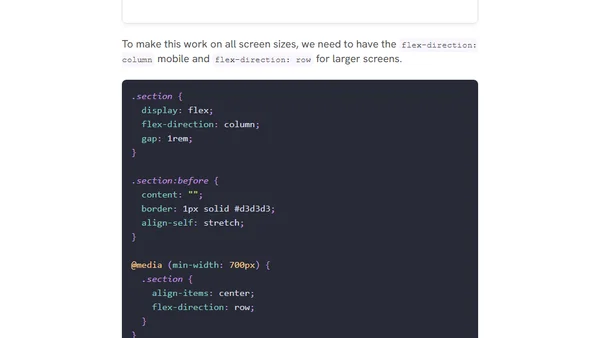
A CSS tutorial on creating a dynamic line separator between flexbox items that adapts to screen size, using pseudo-elements and flexbox properties.
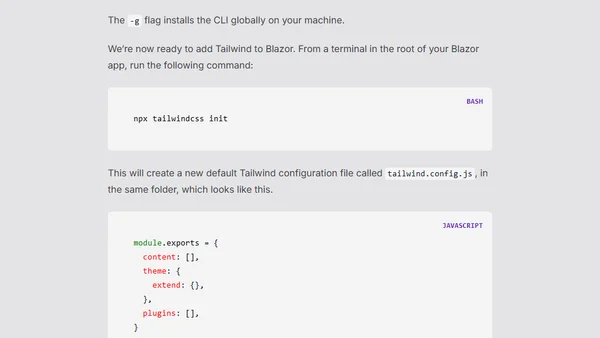
A guide on integrating the latest Tailwind CSS v3 framework into a Blazor web application, covering new features and setup methods.
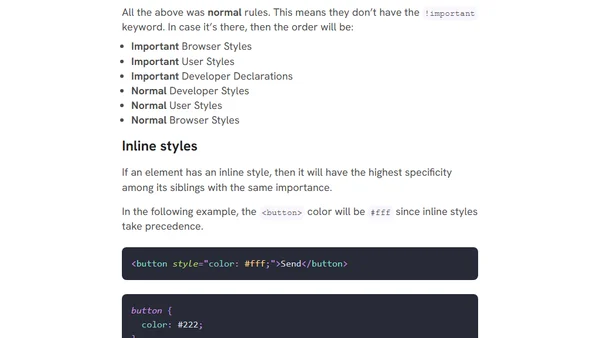
Explains CSS Cascade Layers, a new feature for managing specificity and organizing styles in large projects.
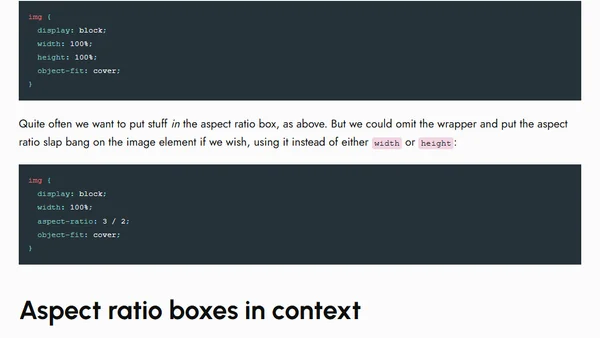
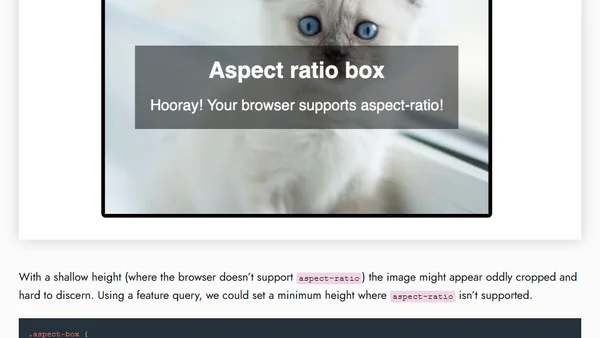
Explains the CSS aspect-ratio property, its benefits over the old 'padding hack', and practical usage examples.
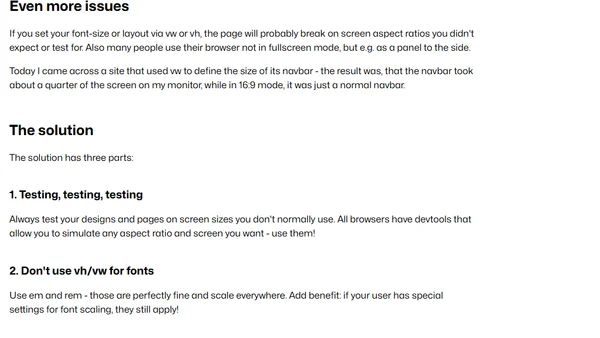
Explains why using vw/vh units for font sizes creates accessibility and layout issues, and recommends using em, rem, and clamp() instead.
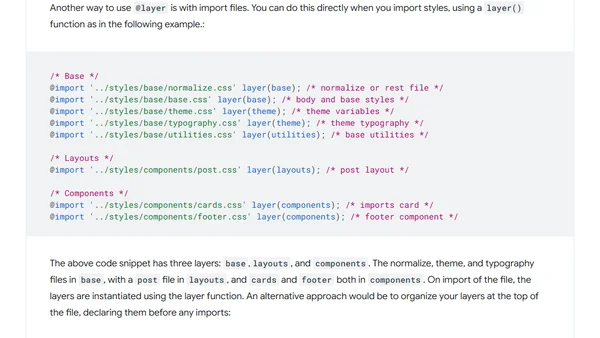
Cascade layers (@layer) are arriving in major browsers, offering developers explicit control over CSS specificity to prevent style conflicts.
A blog post discussing the 'five levels of hype' framework and its application to tech trends, frameworks, and crypto/NFTs.