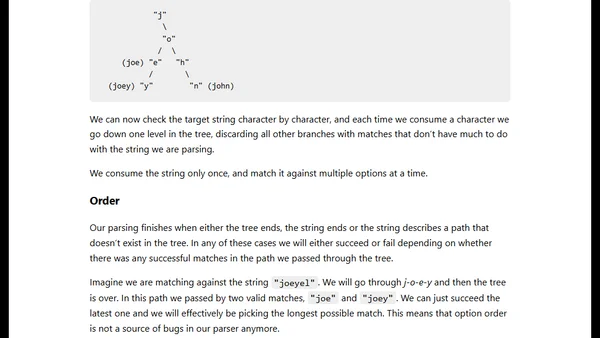
Fast parsing of String Sets in Elm
Explains how to efficiently parse a set of known strings in Elm by building a trie-like structure to avoid the performance pitfalls of Parser.oneOf.

A student's guide to creating generative scribble art portraits using the Processing programming language, detailing their algorithm and process.
Explains how the Mines puzzle game generates Minesweeper grids that are guaranteed to be solvable without guesswork, using a solver and grid adjustments.
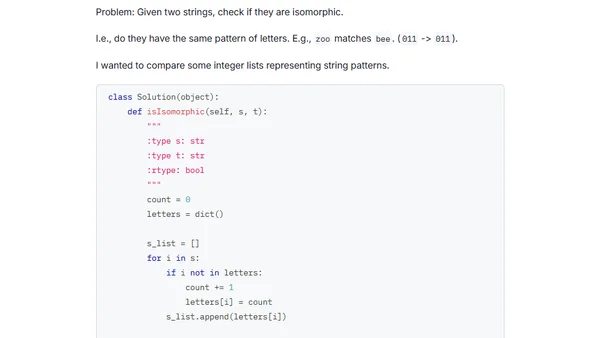
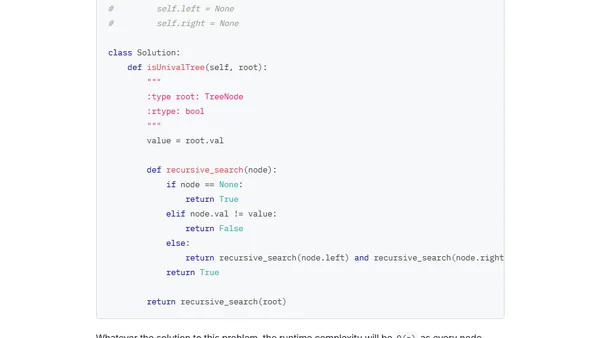
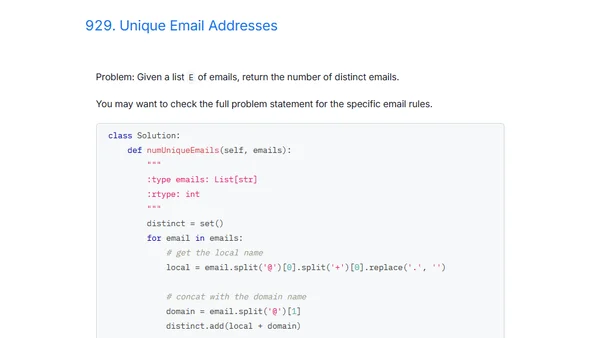
A developer's diary entry about solving three LeetCode problems, focusing on algorithms, runtime analysis, and learning strategies.
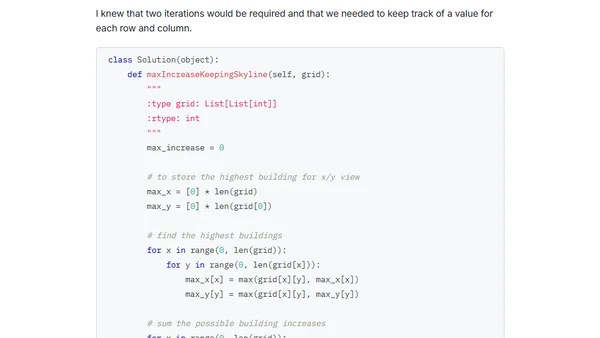
A developer shares optimal Python solutions for three LeetCode string problems, focusing on performance and clean code.
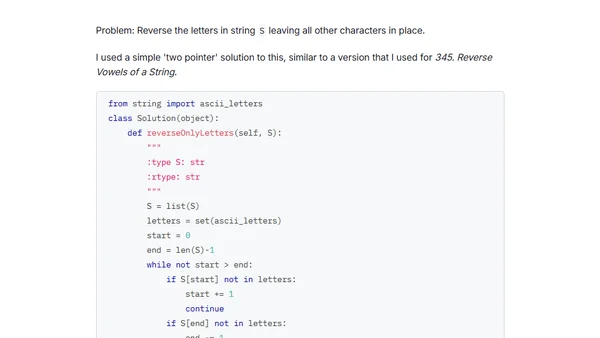
A developer shares solutions and insights for three LeetCode string problems, focusing on performance and algorithm efficiency.
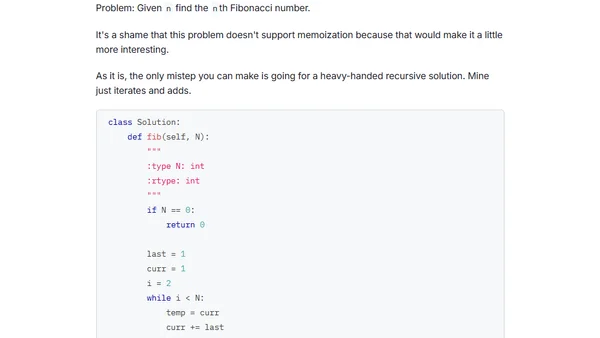
A developer shares solutions and insights for three LeetCode problems, focusing on bitwise operations, Fibonacci, and string manipulation.
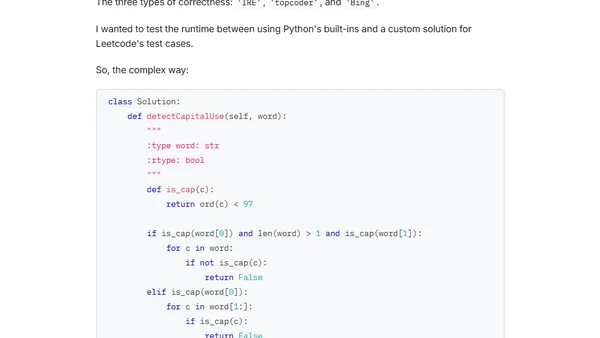
A developer's daily LeetCode journal, analyzing solutions for Majority Element, Detect Capital, and SQL problems, focusing on algorithm optimization.
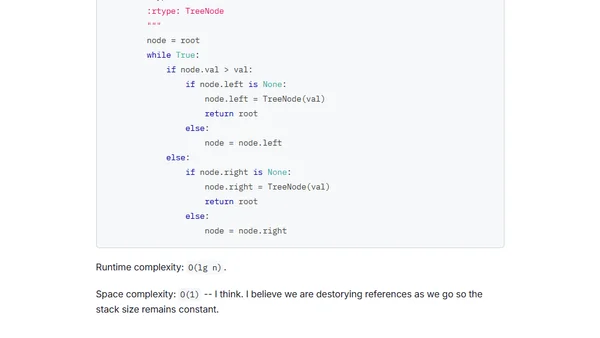
A developer's walkthrough of three LeetCode problems: URL shortening, BST insertion, and parentheses validation, with code and complexity analysis.
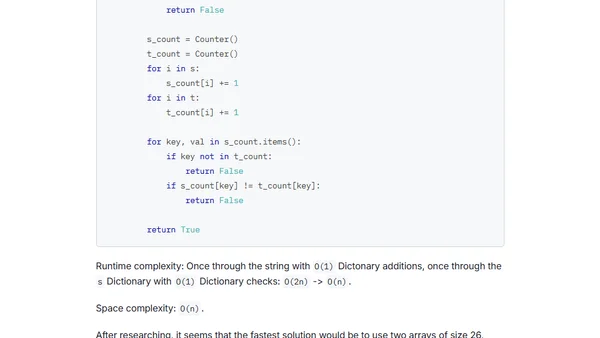
A blog post analyzing Python solutions to LeetCode problems like Two Sum and Valid Anagram, focusing on writing more idiomatic code.
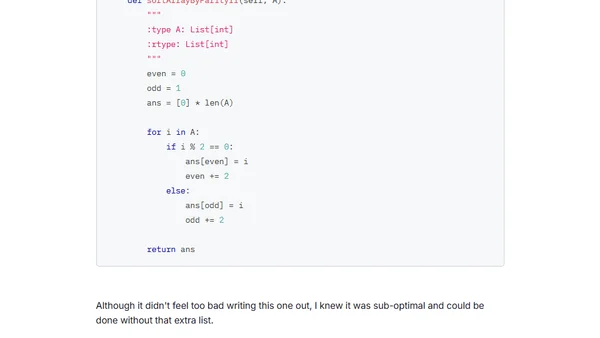
A developer solves three LeetCode problems, focusing on string reversal and array sorting, sharing Python solutions and complexity analysis.
A developer shares solutions and analysis for three easy LeetCode problems, covering array counting, binary tree traversal, and Morse code conversion.
A developer walks through solutions to three easy Leetcode problems, analyzing time/space complexity and discussing potential optimizations.
Explains the APPROX_COUNT_DISTINCT function for faster, memory-efficient distinct counts in SQL, comparing it to exact COUNT(DISTINCT).
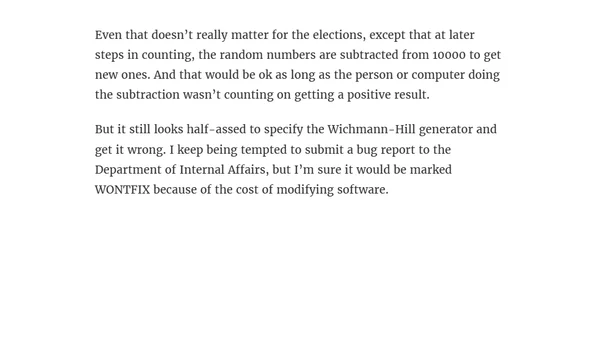
Analysis of a bug in New Zealand's official pseudo-random number generator used for electoral vote counting, based on the Wichmann-Hill algorithm.
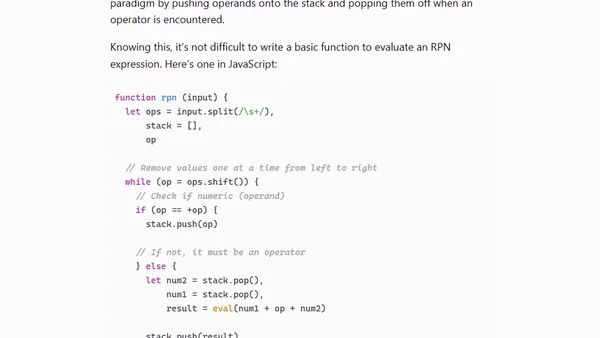
An introduction to Reverse Polish Notation (RPN), explaining its stack-based logic, history with HP calculators, and providing a JavaScript evaluator.
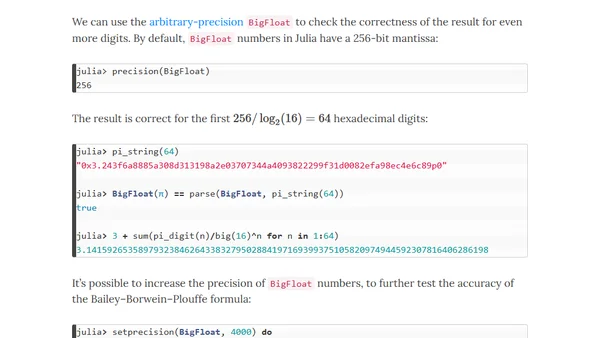
Explains the Bailey-Borwein-Plouffe formula for computing hexadecimal digits of π and provides a Julia implementation.
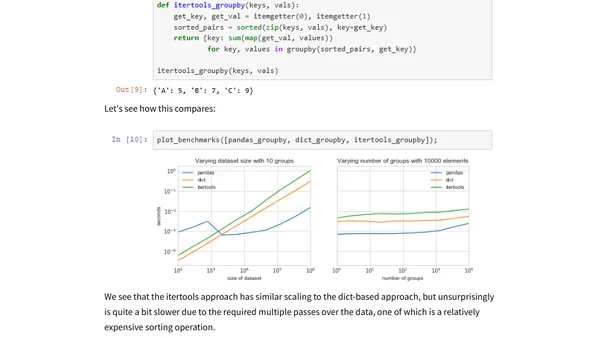
Explores implementing group-by operations from scratch in Python, comparing performance of Pandas, NumPy, and SciPy for data aggregation.
Analyzes the pseudorandom number generator defined in NZ Flag Referendum law, comparing it to the Wichmann-Hill algorithm and noting a potential flaw.
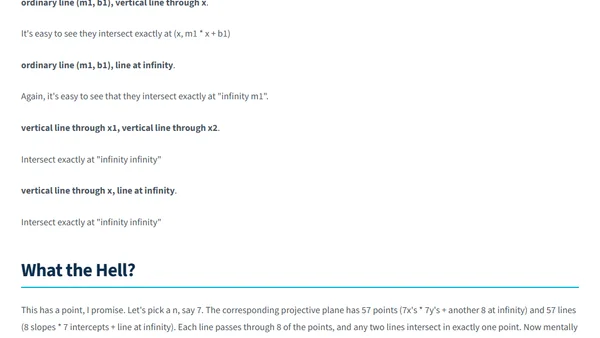
Explores the mathematical design of the game Spot It! using finite projective planes and prime numbers, with code on GitHub.