Gatsby Sparks Joy
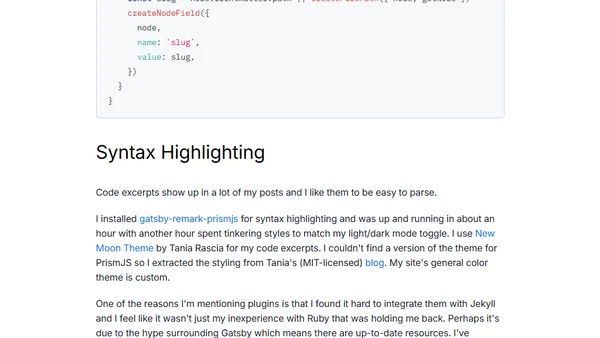
A developer shares their experience migrating a blog from Jekyll to Gatsby, highlighting benefits like semantic HTML, dark mode, and component-based design.
A developer shares lessons learned from a year of studying and teaching web accessibility, emphasizing semantic HTML as the foundation.
A web developer revisits and improves the accessibility of the HTML <abbr> element, addressing tooltip and keyboard navigation issues.
A guide to creating accessible web forms using proper HTML labeling techniques to ensure usability for keyboard and screen reader users.
Explains the importance of semantic HTML in JSX, advocating for choosing elements based on meaning over appearance for better web development.
A guide to implementing web accessibility best practices in React applications, covering semantic HTML, ARIA, and testing tools.
Explores the challenges and best practices for making custom web components accessible, including semantic meaning and keyboard support.
Explains the 5 essential rules for correctly implementing ARIA (Accessible Rich Internet Applications) attributes in HTML to improve web accessibility.
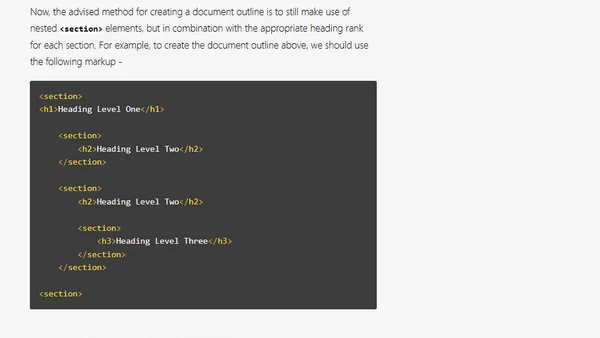
Explains changes to HTML 5.1 document outlines, including deprecated nested <section> method and new rules for nesting <header> and <footer> elements.
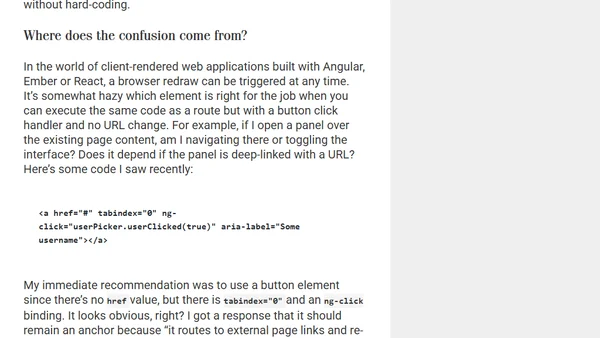
Explains the crucial differences between HTML links and buttons, focusing on accessibility, semantics, and proper use in modern JavaScript web applications.
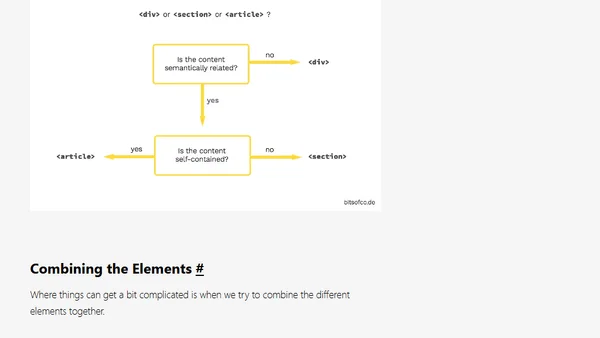
Explains the semantic differences between HTML5's <div>, <section>, and <article> elements and provides guidelines for when to use each.
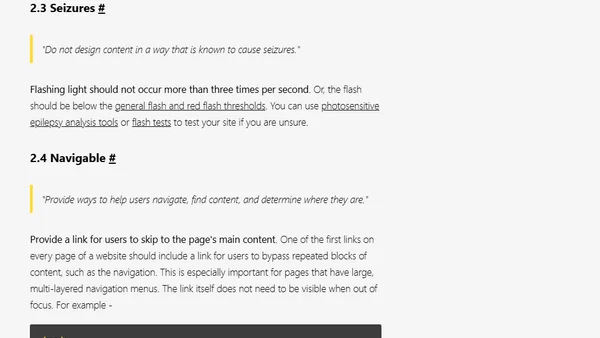
A practical guide summarizing WCAG web accessibility guidelines with actionable examples for developers.
A guide to using the HTML <small> element for legal disclaimers and fine print, not for presentation.
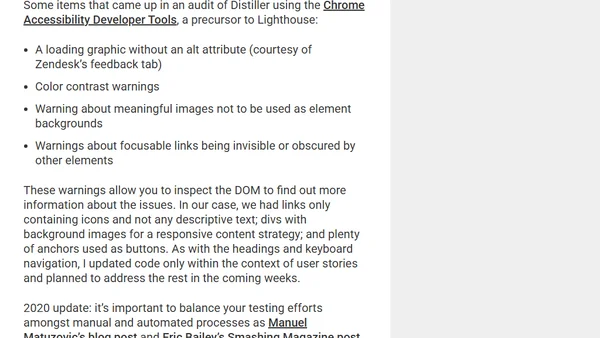
A developer's guide to auditing website accessibility, covering semantic HTML, keyboard navigation, automated testing, and screen reader compatibility.
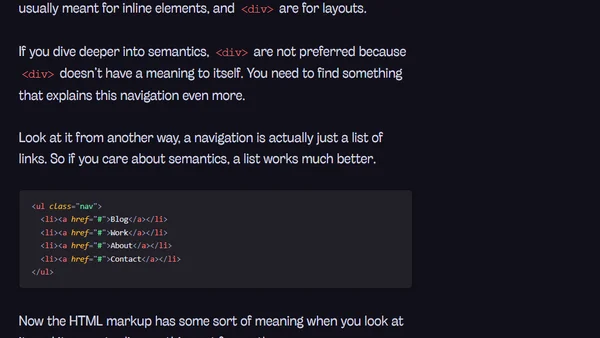
Part 2 of a series on HTML structure, focusing on semantic markup for navigation and other page elements.
A guide on structuring HTML for websites, focusing on big-picture layout with wrappers, blocks, and semantic elements like header, main, and footer.
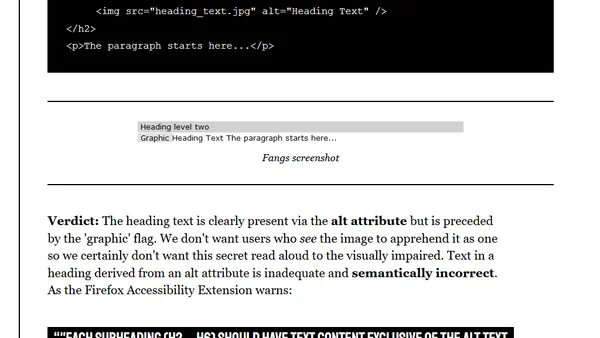
Analyzes accessible text replacement methods for web headings, comparing techniques to hide text visually while keeping it available for screen readers and SEO.
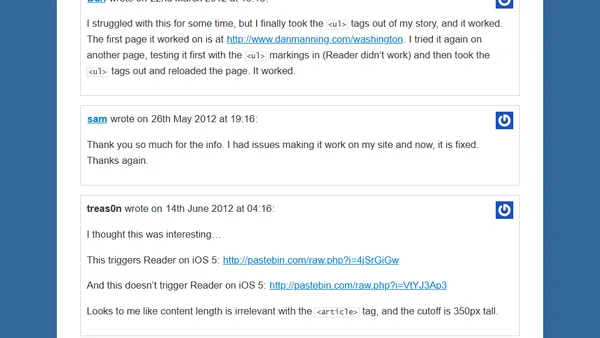
Explores the technical criteria and markup required for Safari Reader to activate on a webpage, based on community testing and analysis.
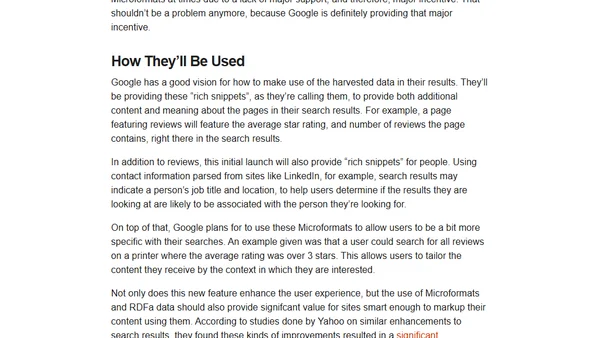
Google announces support for Microformats and RDFa to create 'rich snippets' in search results, boosting adoption and developer value.
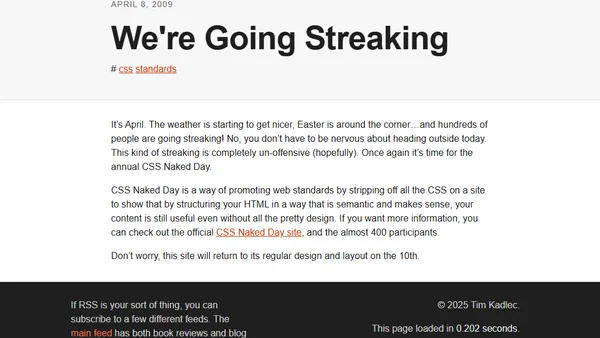
An article about CSS Naked Day, an annual event promoting web standards by removing CSS from websites.