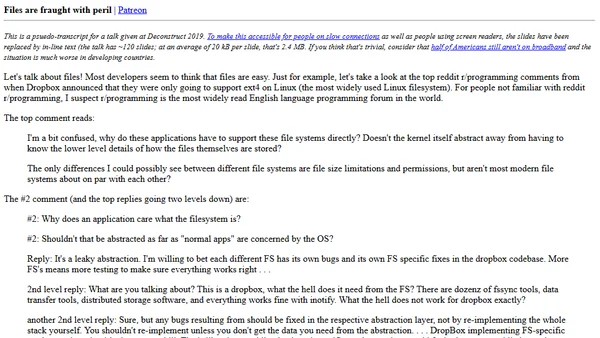
Files are fraught with peril
A talk transcript explaining why files and filesystems are complex, error-prone abstractions for developers, using Dropbox as a case study.
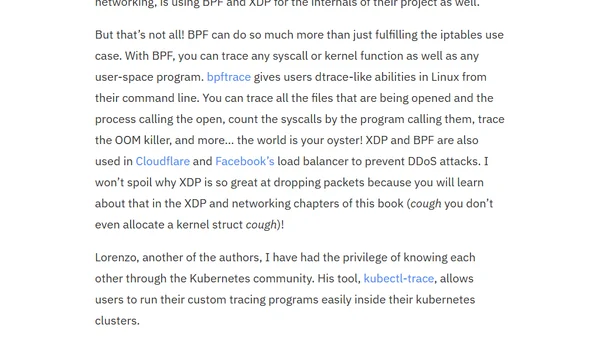
A programmer's enthusiastic foreword for a book on using BPF and XDP for advanced Linux observability, tracing, and networking.
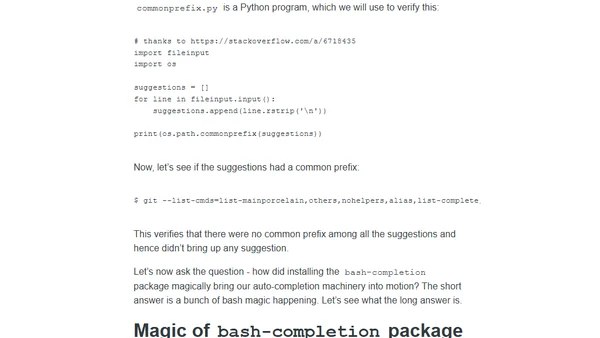
A technical guide exploring how Bash auto-completion works on Linux, including setup, DIY completion scripts, and underlying tools like compgen.
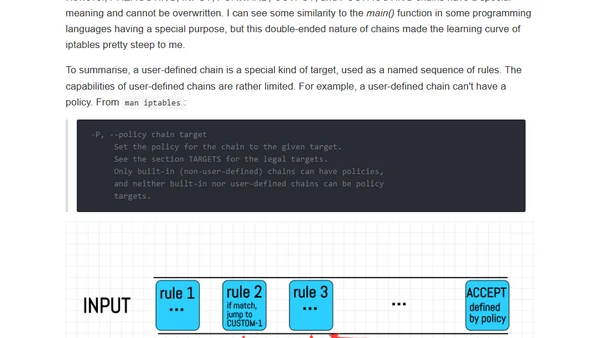
A beginner-friendly, visual guide to understanding Linux iptables, focusing on packet flow and core concepts before diving into commands.
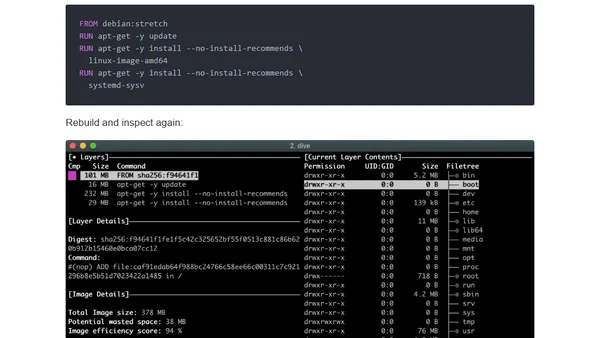
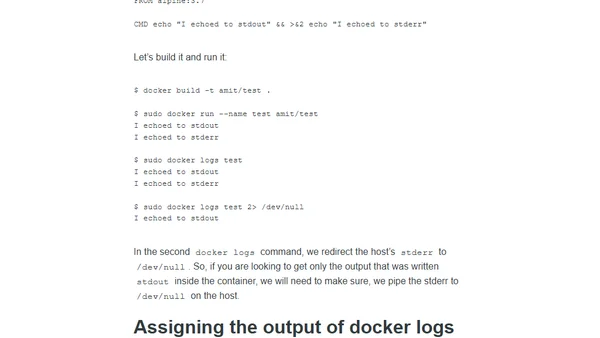
A technical guide explaining how to convert a Docker container's root filesystem into a bootable Linux disk image, exploring container and OS internals.
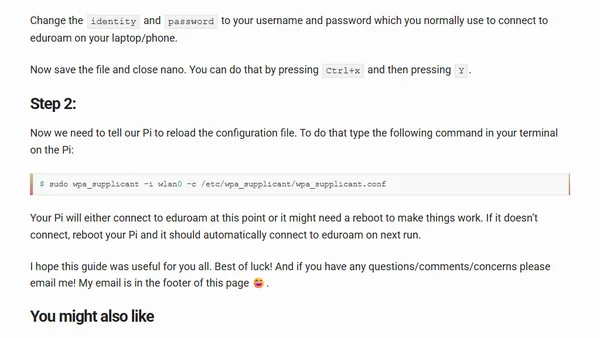
A guide to manually configure a Raspberry Pi to connect to the eduroam university WiFi network using wpa_supplicant.
A personal review and analysis of the 'Revolution OS' film, exploring the history and impact of the GNU project and the Free & Open Source Software movement.
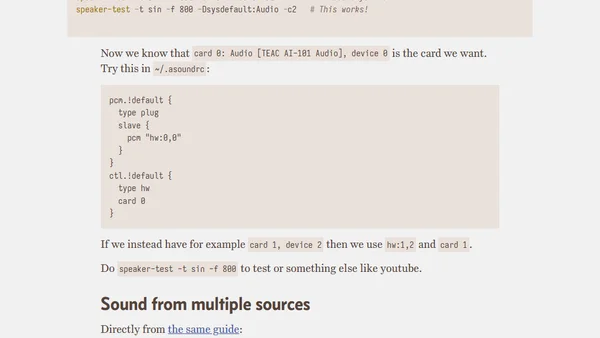
A technical guide on configuring the default audio card in Linux, addressing common issues like card numbering and multi-source playback.
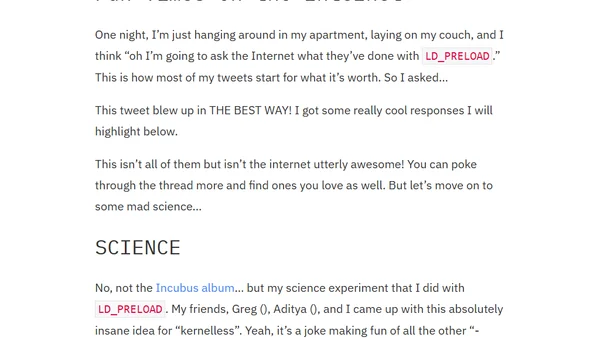
A passionate blog post about the power and creative uses of the LD_PRELOAD environment variable in Linux.
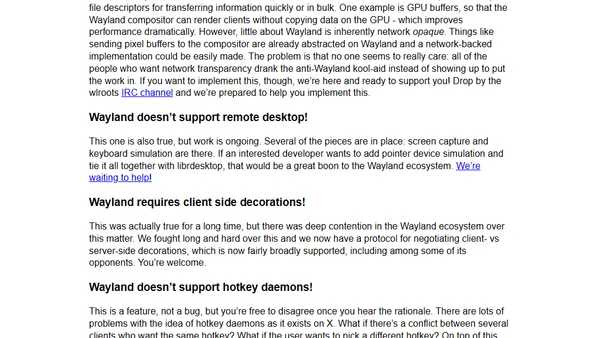
A wlroots maintainer debunks common misconceptions about Wayland, addressing security concerns and screenshot/capture functionality.
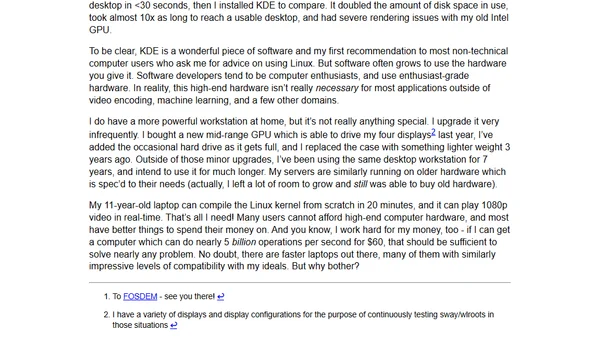
A developer explains the benefits of using older, well-supported hardware for software development and empathizing with users on limited systems.
A developer announces they are transitioning to full-time work on their free and open-source software projects, funded by community donations and subscriptions.
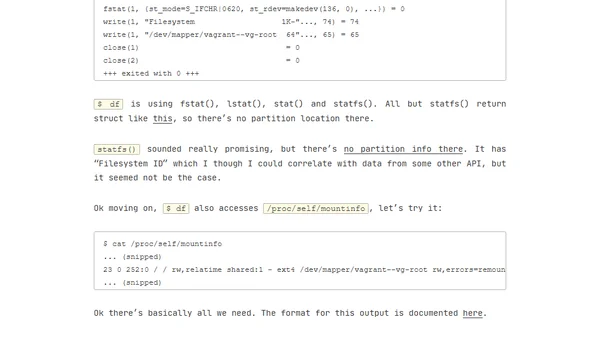
Explains how to use strace to understand how Linux commands like df work internally by tracing system calls.
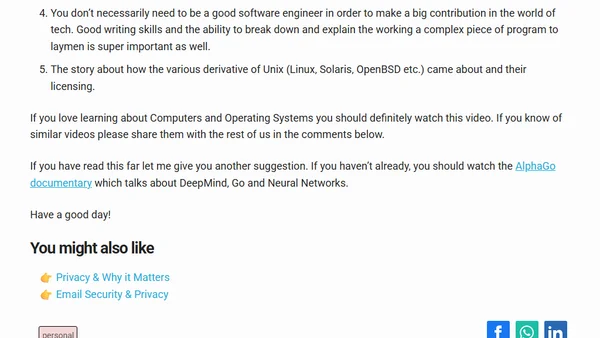
A blog post reviewing a video presentation by Rob Pike on the history and development of the Unix operating system at Bell Labs.
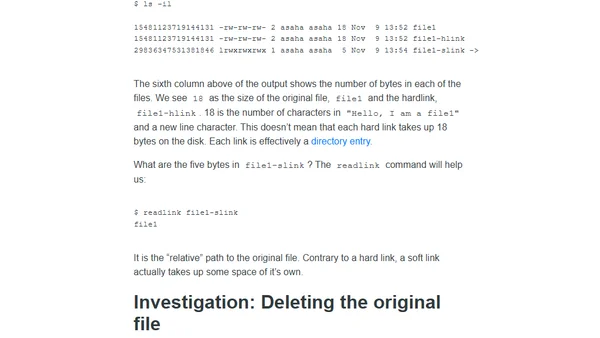
Explains the differences between hard links and symbolic links on Linux, covering inodes, link counts, and practical examples.
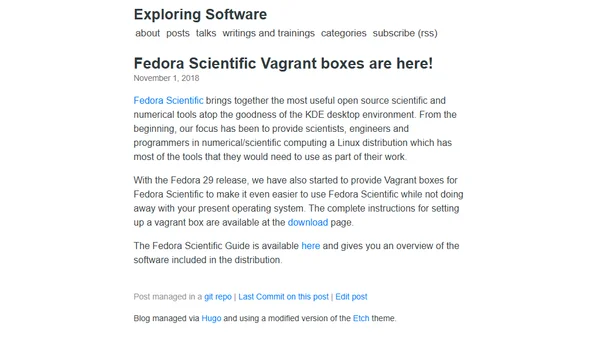
Fedora Scientific now offers Vagrant boxes, providing a pre-configured environment for scientific computing with KDE desktop and open-source tools.
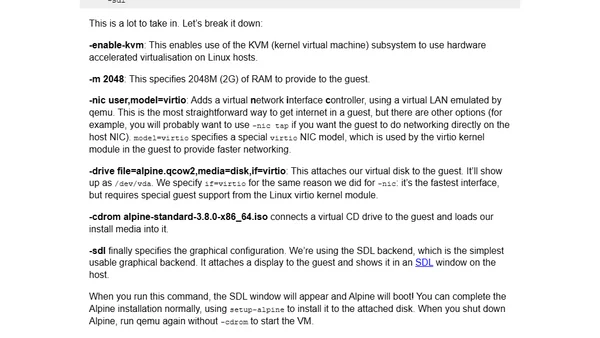
A guide to getting started with the QEMU virtualization tool, covering basic setup and command-line options for running a Linux VM.
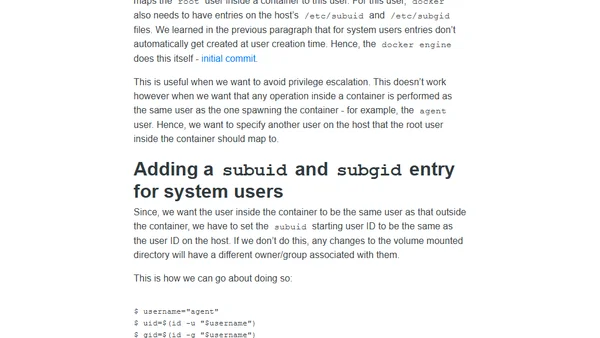
Explains how to use Docker's userns-remap feature with Linux system users to solve permission issues in CI/build environments.
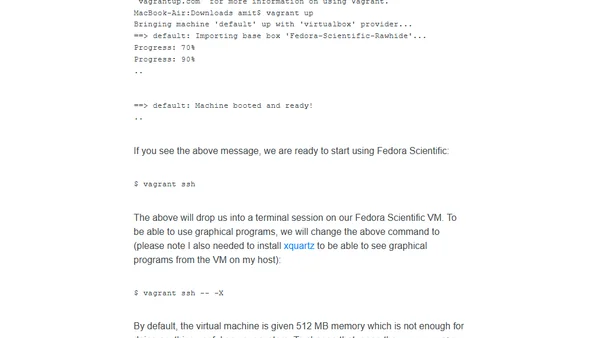
Announcing pre-release Vagrant boxes for Fedora Scientific, making it easier to run this scientific computing environment in a virtual machine.